My Sister Defended Her Boyfriend and Called Me a Liar—Until the Truth Came Out
Family drama, past relationships, and a shocking lie collided during what should have been a normal dinner with friends. A 25-year-old woman found herself in the middle of an unexpected conflict after revealing a truth about her sister’s boyfriend—who also happened to be her own ex from high school. The situation escalated quickly when her sister accused her of lying and trying to sabotage the relationship, turning a simple conversation into a full-blown Reddit AITA relationship conflict.
The twist? The boyfriend had secretly been pretending to be a lifelong virgin to align with the sister’s religious beliefs about waiting until marriage. When the truth came out, he denied everything and blamed the woman, leaving the sister humiliated and angry. But days later, the story took a dramatic turn after the sister discovered something even worse: not only had he lied about his past, he had been cheating throughout the relationship. What began as a debate about honesty ultimately exposed a deeper betrayal and saved the sister from a potentially disastrous marriage.

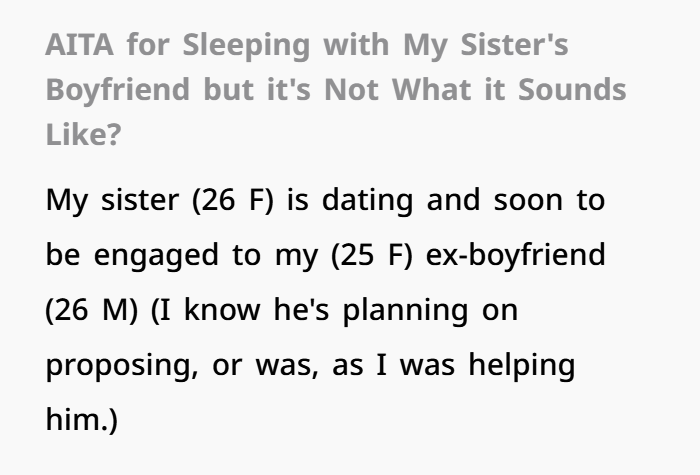
At first glance, this situation looks like classic Reddit AITA relationship drama—a messy love triangle involving siblings and an old boyfriend. But when you break it down, the core issue isn’t really about sleeping with someone years ago. It’s about honesty, values, and the psychological pressure that can come from strict cultural or religious expectations around virginity before marriage.
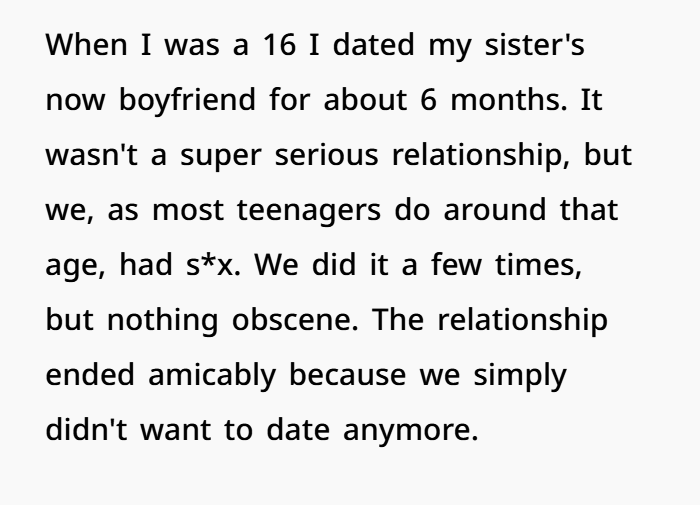
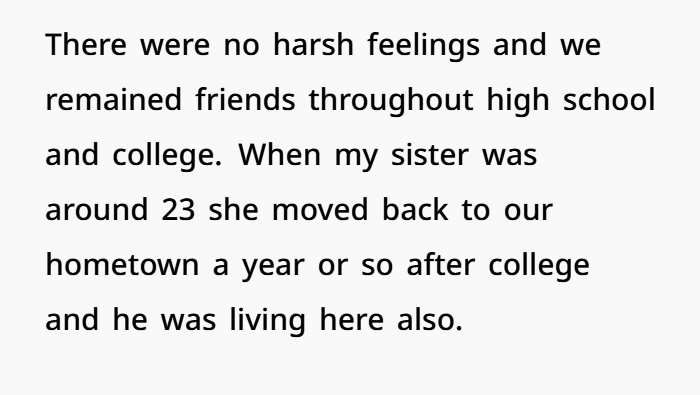
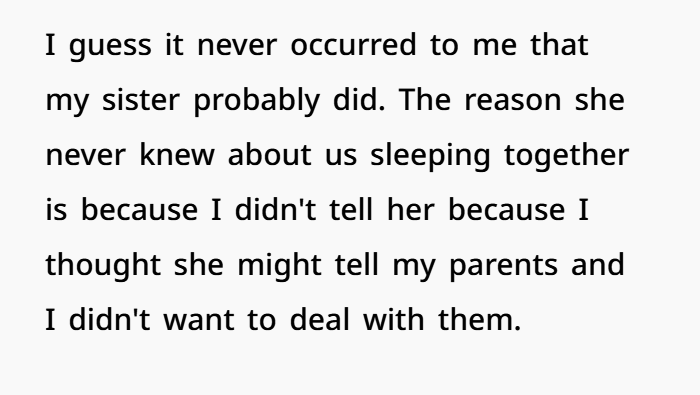
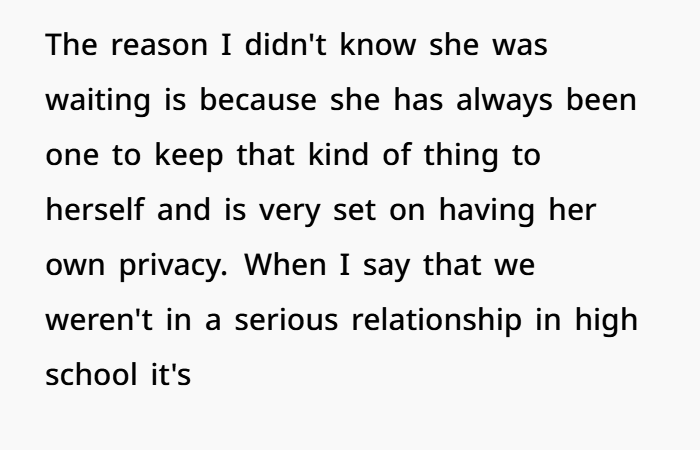
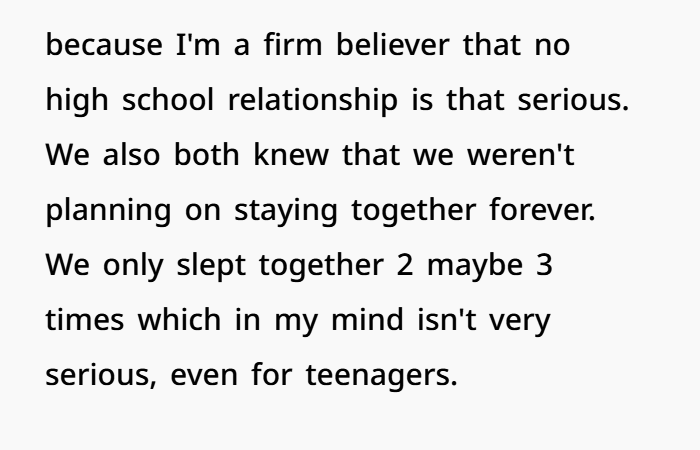
The original poster dated her sister’s current boyfriend when they were teenagers. It lasted only about six months, a typical high school relationship. They had sex a few times and eventually broke up without any drama. Over the years they stayed friends. From her perspective, it was ancient history. Something that barely mattered anymore.
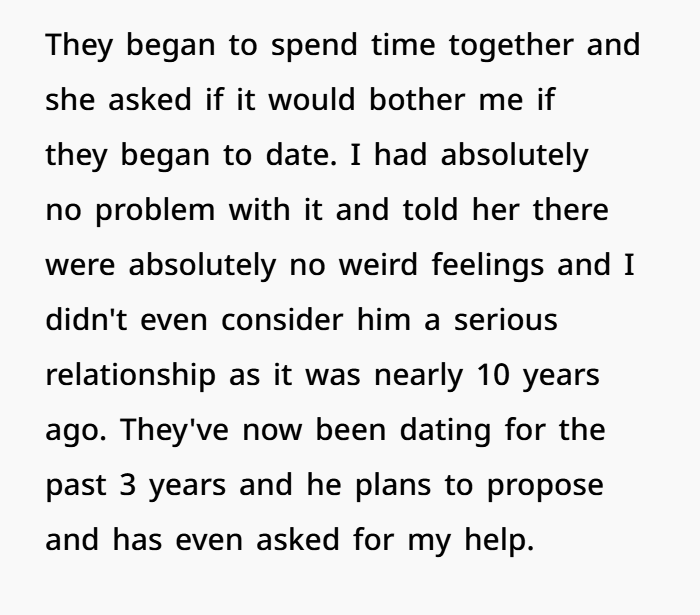
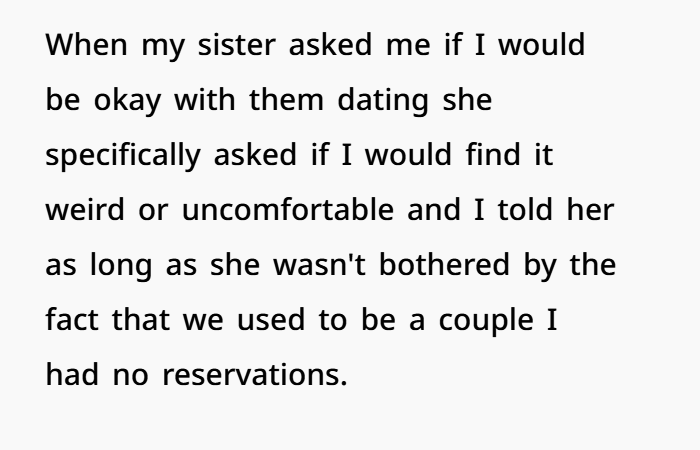
Years later, when her sister moved back to their hometown and started spending time with him, she did the respectful thing and asked if it would be weird to date him. That moment is actually important from a relationship boundaries standpoint. In family dynamics, dating a sibling’s ex can sometimes create tension, so asking first is usually seen as the right move.
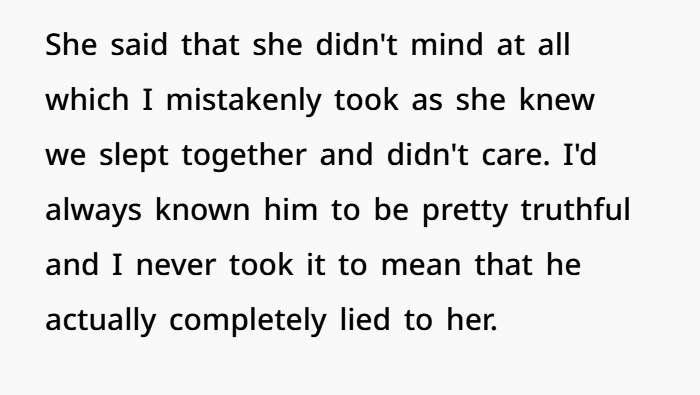
The poster gave her blessing. To her, the relationship was so old and insignificant that it didn’t even register as a problem. What she didn’t realize was that her sister believed something completely different about the man she was dating.
The couple had built their relationship around the idea that they were both saving themselves for marriage.
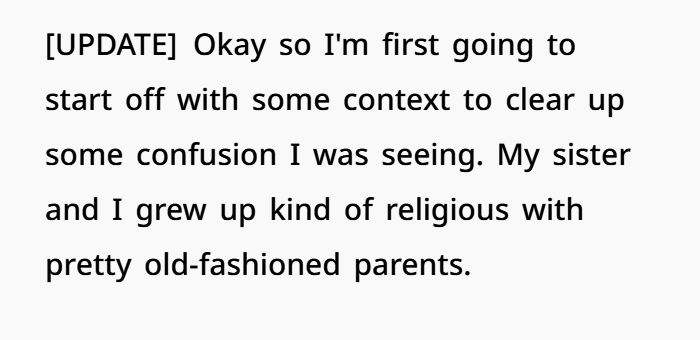
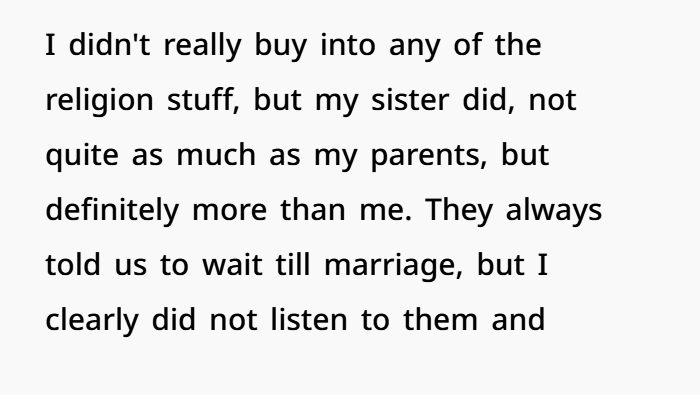
This belief wasn’t random. The sisters were raised in a religious household with traditional values, where abstinence before marriage was strongly encouraged. The poster didn’t follow that path, but her sister clearly took it seriously. For her, being with someone who shared that commitment probably felt deeply meaningful.
From a psychological perspective, this is where the problem really begins.
When people build relationships around shared moral or religious identity, honesty becomes extremely important. Research in relationship psychology consistently shows that deception about core values—especially around sexuality, faith, or commitment—can cause severe trust damage when discovered later.
And in this case, the boyfriend didn’t just stay quiet about his past.
He actively lied.
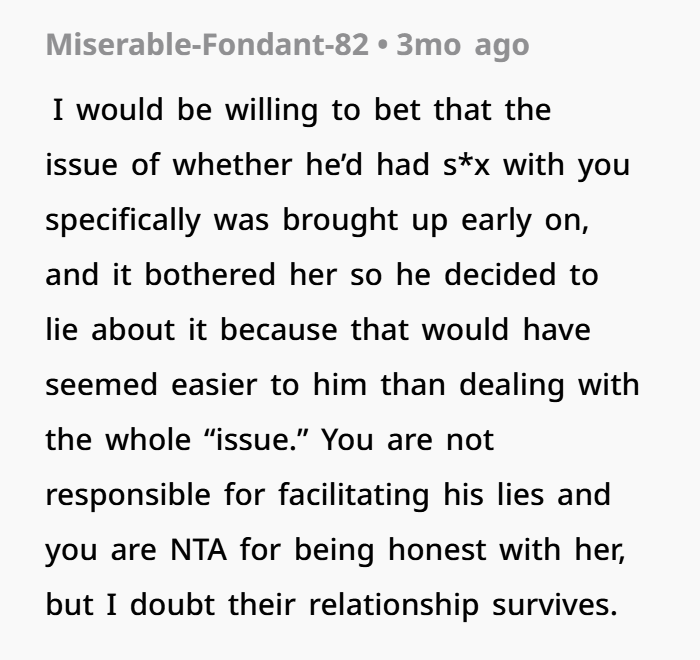
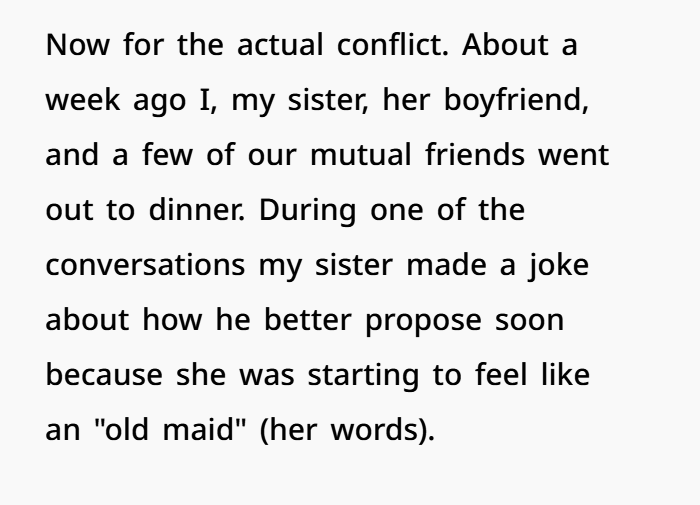
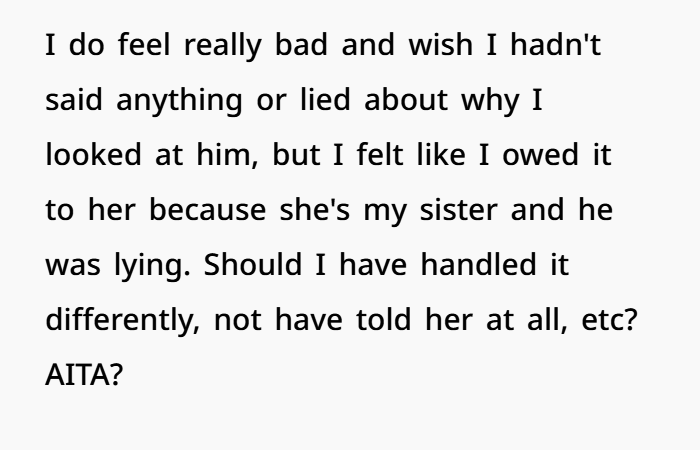
At dinner, when the sister proudly mentioned they had both been saving themselves for marriage their whole lives, the poster naturally reacted with confusion. She knew that wasn’t true. They had slept together in high school. Her reaction—giving him a strange look—was instinctive.
The sister noticed and pushed for an explanation.
That moment became the turning point.
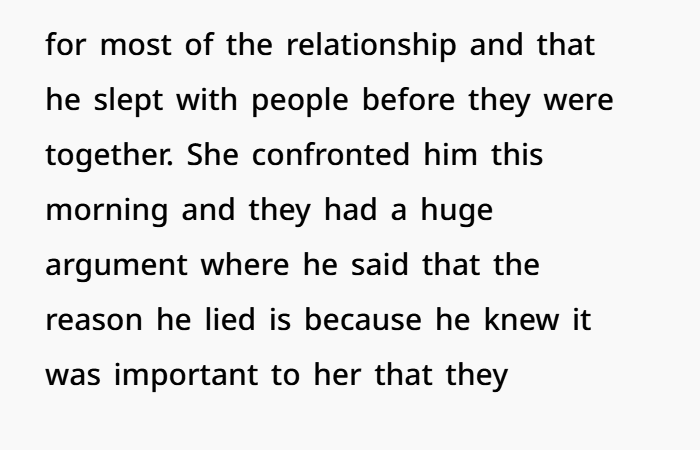
The poster tried to brush it off at first, but the sister insisted. Eventually she admitted the truth: they had sex years ago.
Instead of owning up to it, the boyfriend doubled down on the lie.
He told the sister it never happened and accused the poster of trying to sabotage their relationship. This tactic is a classic example of gaslighting in relationships, where someone denies reality and shifts blame onto another person to protect themselves.
Gaslighting works because it creates doubt. The sister was suddenly stuck between two conflicting stories: her boyfriend’s denial and her sister’s claim.
Unfortunately, emotional bias played a big role.
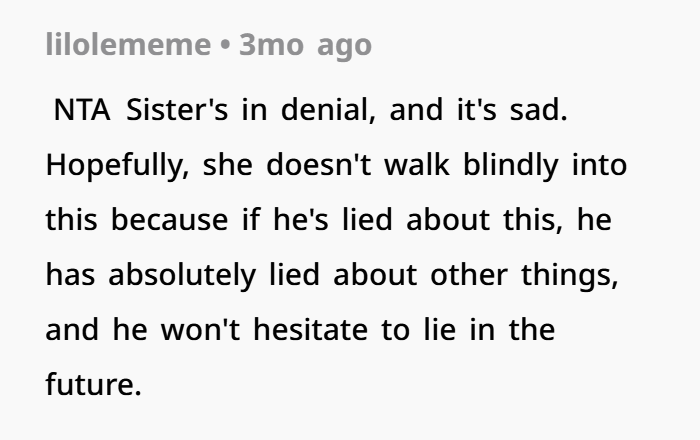
Studies on confirmation bias in romantic relationships show that people often believe the version of events that protects their existing emotional investment. In this case, accepting her boyfriend’s lie meant she could keep believing in the future she imagined—marriage, shared values, and a partner who matched her beliefs.
Believing her sister would have shattered that picture.
So she reacted with anger instead.
She accused the poster of lying, trying to sabotage the engagement, and even claimed she must still have feelings for him. It’s not uncommon for people to lash out when a painful truth threatens their worldview.
But the story didn’t end there.
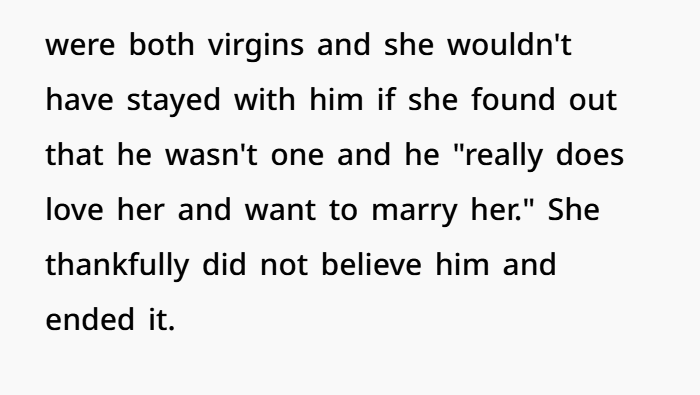
A few days later, the sister did something that completely changed everything. She went through his phone.
What she found confirmed the worst possible outcome.
Not only had he lied about being a virgin, he had also been cheating on her repeatedly throughout their relationship. That discovery shifted the entire narrative from family drama to relationship betrayal.
Suddenly the sister could see that the poster wasn’t attacking her relationship at all. She had simply told the truth.
This moment highlights an important point about trust and transparency in long-term relationships. Lies about the past often signal deeper dishonesty patterns. While not always the case, research in relationship counseling shows that people who conceal major aspects of their history sometimes continue hiding other behaviors as well.
In this situation, the lie about virginity wasn’t just about embarrassment.
It was strategic.
The boyfriend admitted he hid the truth because he knew the sister wouldn’t have stayed with him if she knew he wasn’t a virgin. That admission reveals something crucial: the relationship was built on false pretenses from the beginning.
This kind of deception is sometimes called relationship misrepresentation, where someone intentionally presents themselves as someone different to secure commitment. It’s surprisingly common in dating psychology, especially when one partner believes revealing the truth might end the relationship.
But as this story shows, the truth almost always surfaces eventually.
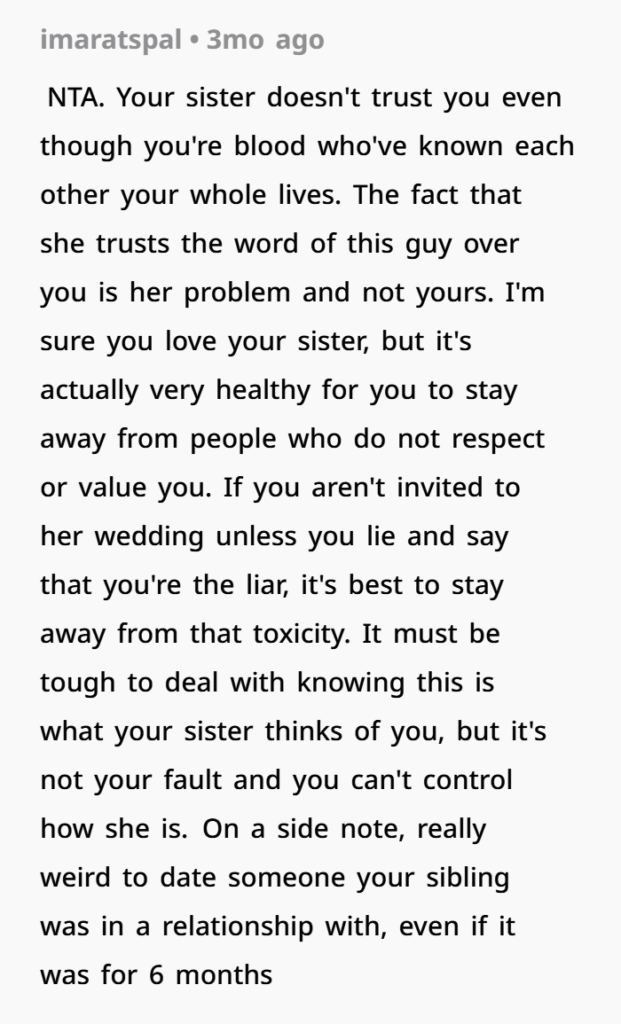
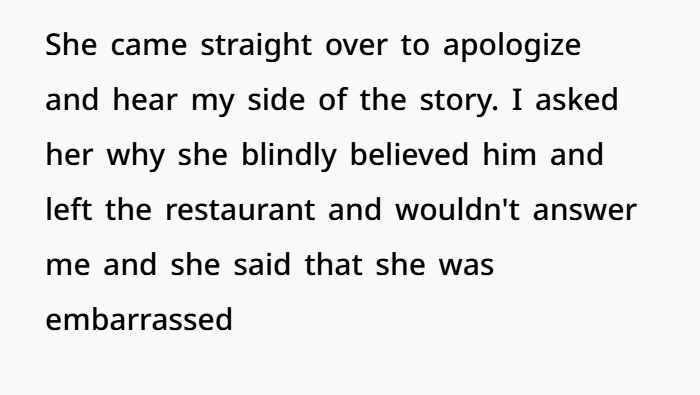
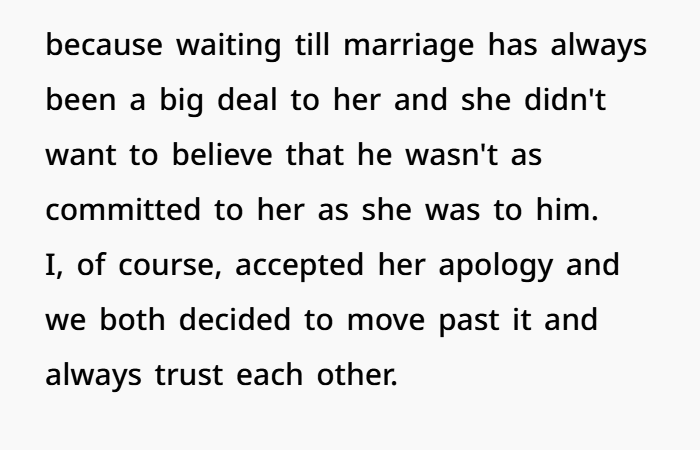
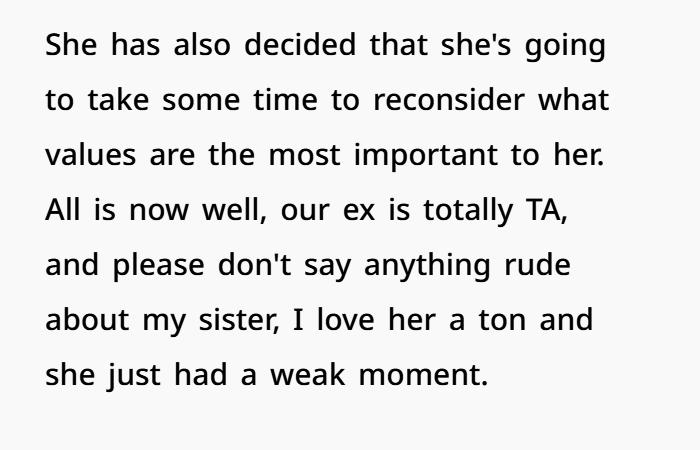
Once the sister learned about the cheating and the lies, the engagement ended immediately. She went to her sister, apologized, and asked to hear the full story. The two talked things through and repaired their relationship.
In the end, the situation turned from a potential sibling rift into something closer to a wake-up call.
The poster didn’t just tell an awkward truth at dinner.
She unknowingly helped prevent a marriage built on lies.
Stories like this often go viral in Reddit AITA discussions because they hit on real human fears—trust, loyalty, and the fear of being betrayed by someone you love. They also raise a difficult question: should you speak up when you know something that could hurt someone’s relationship?
There isn’t always a simple answer.
But in this case, the truth mattered.
And while the dinner conversation caused temporary pain, it ultimately exposed a much bigger problem that might have stayed hidden until after the wedding.
Sometimes honesty creates chaos in the short term.
But it can also save people from much worse heartbreak later.
Comments From The Community