AITA for Bringing My Wife’s Affair Partner to Thanksgiving So Everyone Would Know?
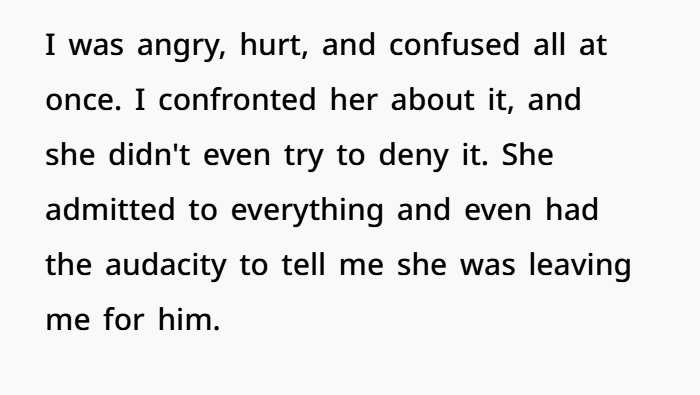
This story comes from a husband whose seven-year marriage collapsed after discovering his wife had been cheating on him with another man. Until that moment, he believed their relationship was stable and loving. But when he confronted her, the situation took an even harsher turn. Not only did she admit to the affair, she told him she planned to leave him for the other guy. That kind of blunt betrayal left him feeling blindsided, angry, and emotionally wrecked.
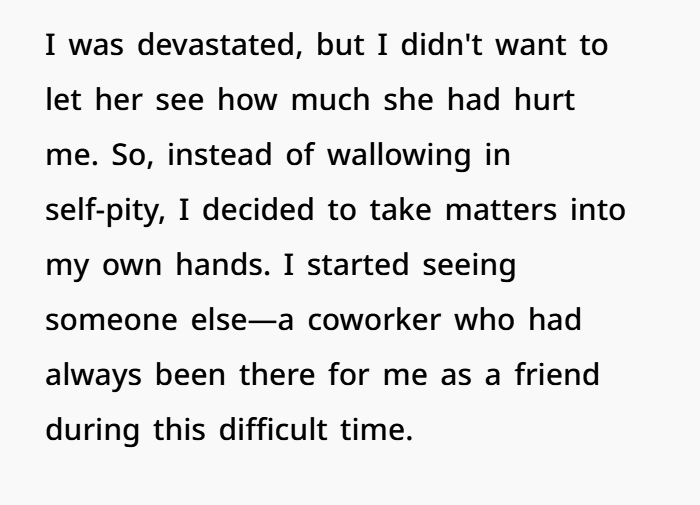
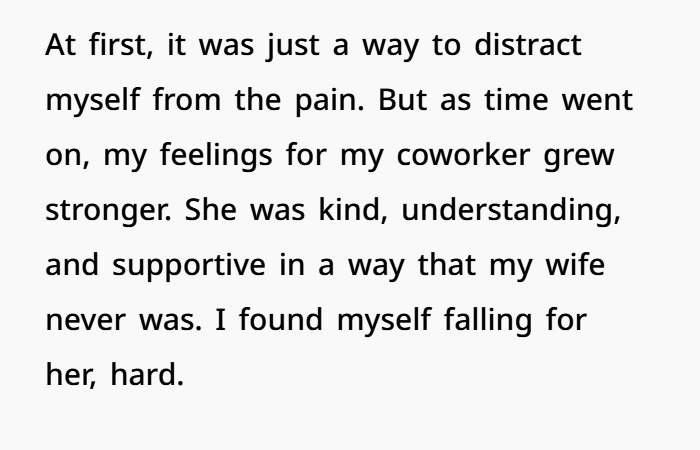
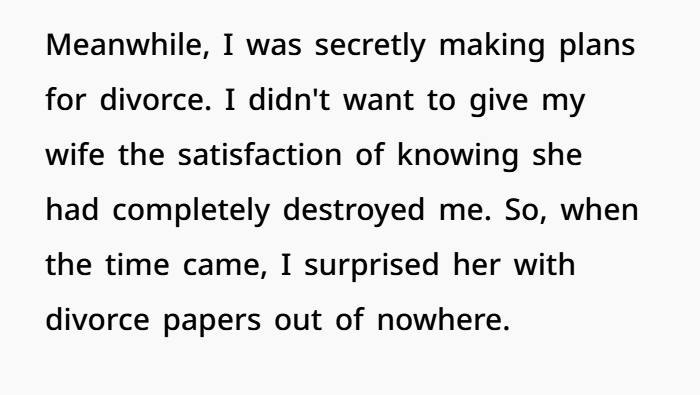
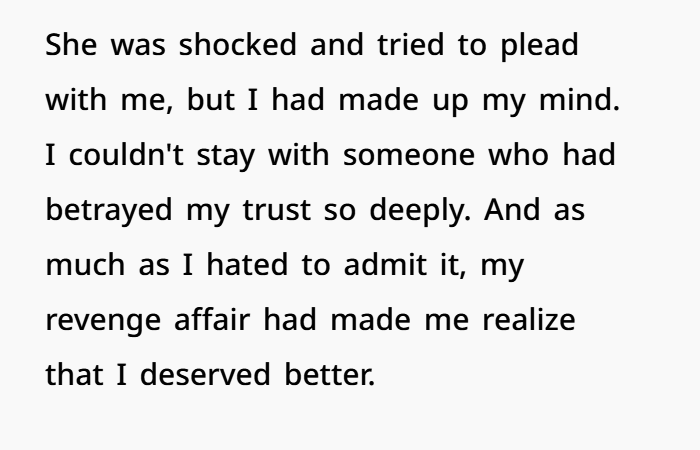
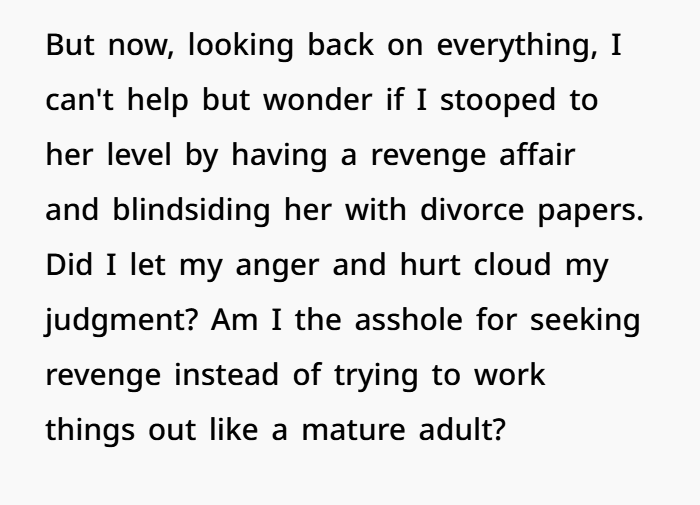
Instead of begging her to stay or showing how deeply the betrayal hurt him, he chose a different path. He began seeing a coworker who had supported him through the emotional fallout. What started as a distraction slowly turned into genuine feelings. Meanwhile, he quietly prepared for divorce. Eventually he served his wife divorce papers without warning. She reacted with shock and suddenly tried to plead for the marriage, but by that point he had already emotionally moved on. Now he’s questioning whether the revenge affair, emotional rebound relationship, and surprise divorce filing were justified responses to betrayal—or if he simply sank to the same level as the partner who cheated first.

Infidelity is one of the most painful events that can happen in a long-term relationship. Psychologists often compare the emotional shock of discovering a partner’s affair to other major life traumas because it can shatter a person’s sense of trust, identity, and stability all at once. In many relationship counseling studies, marital infidelity is listed as one of the leading causes of divorce worldwide, alongside financial conflict and communication breakdown.
In this story, the initial trigger is clear: the wife had an affair and openly admitted it. That alone can destabilize a marriage. But what complicates the situation is the chain reaction that followed — specifically the husband’s revenge affair and strategic divorce planning.
To understand why people react this way, it helps to look at the psychology of betrayal.
When someone learns their spouse has cheated, the brain often enters what psychologists call “betrayal trauma response.” This includes feelings like anger, humiliation, loss of control, and a strong desire to reclaim personal power. Many people describe the experience as having their reality ripped away overnight. The relationship they thought they had suddenly feels like it was built on lies.
In situations like this, some people try to repair the marriage through marriage counseling, couples therapy, and trust rebuilding programs. But others move in the opposite direction — toward retaliation.
That’s where the idea of a revenge affair comes in.
A revenge affair is when someone intentionally starts a relationship or sexual connection after discovering their partner cheated, often as a way to restore self-esteem or “even the score.” It’s surprisingly common in discussions around infidelity recovery. Relationship therapists say that many betrayed partners feel an intense urge to prove they are still desirable or capable of attracting someone else.
In this story, the coworker initially served as emotional support. That dynamic often appears in workplace relationships after a personal crisis. Studies on emotional rebound relationships after divorce or breakup show that people naturally gravitate toward someone who listens, validates their feelings, and provides stability during emotional chaos.
What’s interesting here is that the husband claims the connection started as a distraction but slowly developed into genuine feelings. That progression aligns with what psychologists call emotional transition relationships — connections that begin during periods of vulnerability but later evolve into legitimate romantic bonds.
However, revenge affairs come with their own complications.
From a relationship ethics standpoint, many people argue that cheating back doesn’t erase the original betrayal. Instead, it creates a second breach of trust. Even if the marriage was already falling apart, some believe it muddies the moral clarity of the situation. Others argue the opposite: if one partner already ended the emotional commitment by cheating, the betrayed partner no longer owes the same level of loyalty.
Another important element in this story is the surprise divorce filing.
Divorce law in many countries allows one spouse to file without prior warning. Legally speaking, surprising a partner with divorce papers is not unusual. In fact, lawyers sometimes recommend preparing quietly when infidelity is involved, especially if financial assets, property, or custody issues could become complicated.
This strategy falls under what divorce attorneys often call “strategic separation planning.” Instead of announcing the intention to divorce early, one partner gathers legal advice, organizes finances, and prepares documents before officially filing. The goal is to avoid drawn-out conflict or manipulation once the decision is made.
But emotionally, surprise filings can feel brutal.
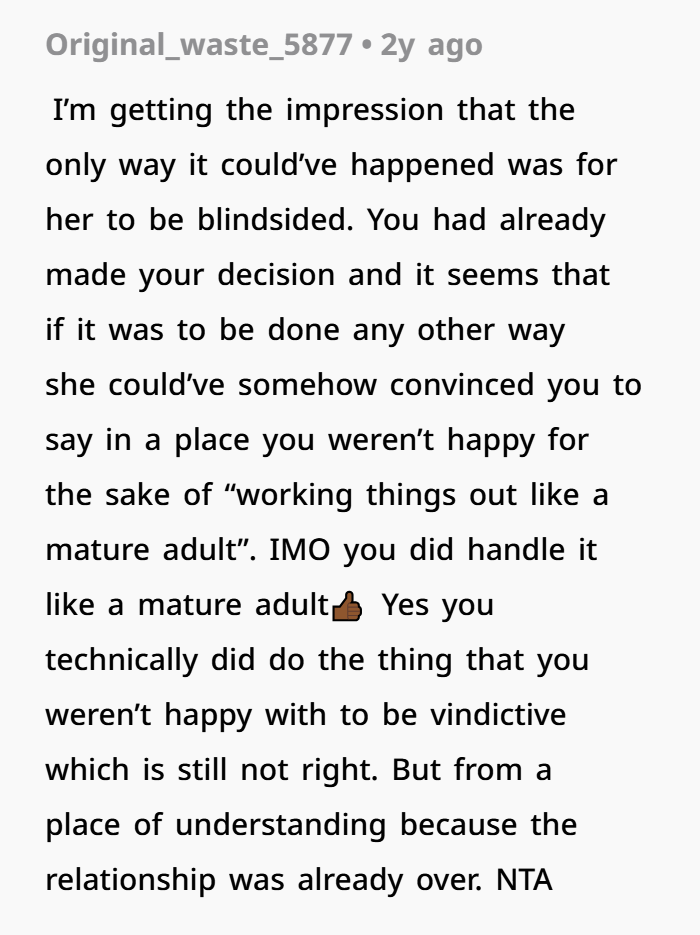
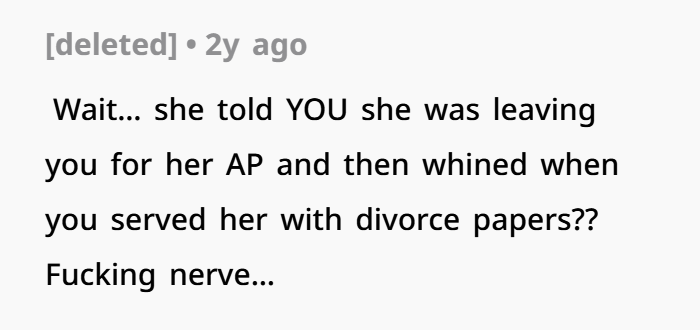
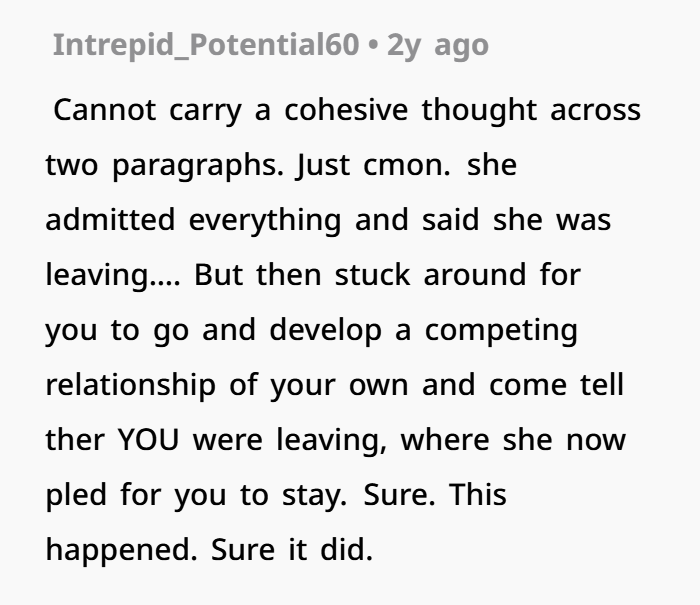
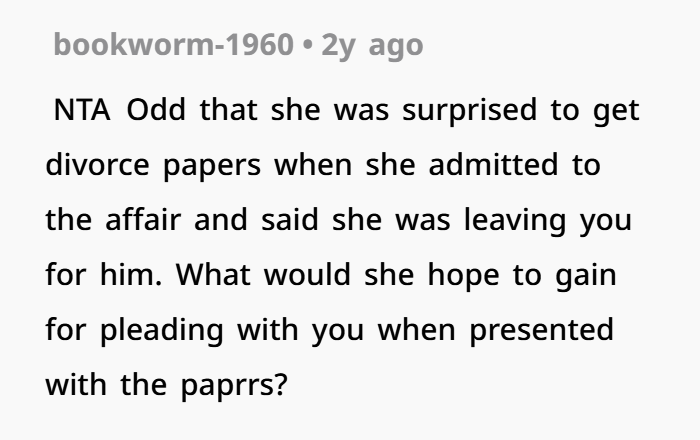
When one partner believes the relationship might still be repairable, receiving unexpected divorce papers can feel like a second betrayal. That may explain why the wife suddenly changed her reaction and began pleading to save the marriage after the papers were served.
Interestingly, this kind of reversal happens more often than people think.
In relationship psychology, there’s a concept called “affair fog.” During an affair, the cheating partner may become emotionally caught up in the excitement, novelty, or validation provided by the new relationship. This can distort their perception of their existing marriage. Once the affair partner loses appeal or reality sets in — such as the threat of divorce — the cheating partner sometimes tries to return to the original relationship.
However, by that stage the betrayed partner may already be emotionally detached.
Another layer worth discussing is the idea of emotional closure after infidelity.
Many people who are cheated on struggle with feelings of powerlessness. They feel like the cheating partner controlled the end of the relationship. Taking decisive action — whether it’s filing for divorce or moving on with someone else — can restore a sense of agency. In psychological terms, this is called “regaining narrative control.”
Instead of being the person who was abandoned, they become the person who chose to walk away.
But revenge can still come with emotional costs.
Even if the revenge affair helped the husband regain confidence, it doesn’t always guarantee long-term healing. Some therapists warn that revenge-driven decisions can delay emotional processing. Instead of confronting grief, anger, and betrayal directly, people may mask those emotions with new relationships.
That doesn’t mean rebound relationships always fail. Some actually grow into strong partnerships. But relationship experts usually recommend taking time to process the end of a marriage before fully investing in another long-term commitment.
There’s also a social debate surrounding moral equivalence in cheating.
Some people believe cheating is cheating, regardless of circumstances. Under that perspective, both partners ultimately engaged in affairs. Others argue context matters — the wife cheated first while still expecting the marriage to continue, whereas the husband’s relationship developed after the marriage had effectively collapsed.
This difference between “active betrayal” and “post-betrayal coping behavior” is often debated in both legal and ethical discussions around divorce.
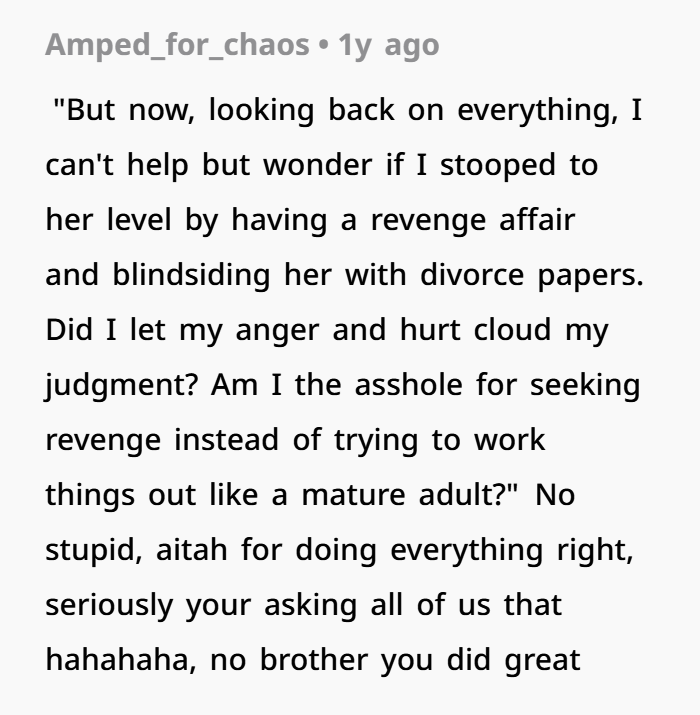
Finally, there’s the question the husband is asking himself now: did revenge cloud his judgment?
Self-reflection after major relationship conflict is common. Once the anger fades and life stabilizes, people often revisit their actions and wonder if they handled things the best way possible. That reflection doesn’t necessarily mean the decision was wrong. It simply means the person is processing the emotional aftermath of a life-changing event.
And that’s really the core of this story.
A marriage ended because of betrayal. A revenge relationship emerged from the emotional wreckage. And a carefully planned divorce closed the chapter.
Whether the husband’s actions were justified retaliation or a step too far is something people will always debate.
But one thing is clear: when trust breaks in a marriage, the aftermath rarely follows a clean or simple path.
The Comments Are In