I Found Out My Wife Was Cheating… Then I Discovered My Daughter Knew
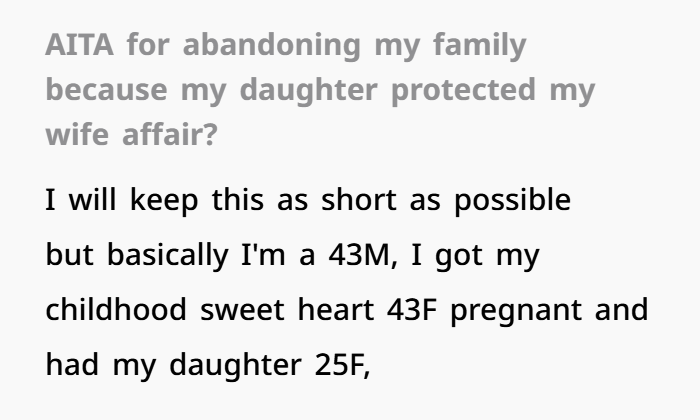
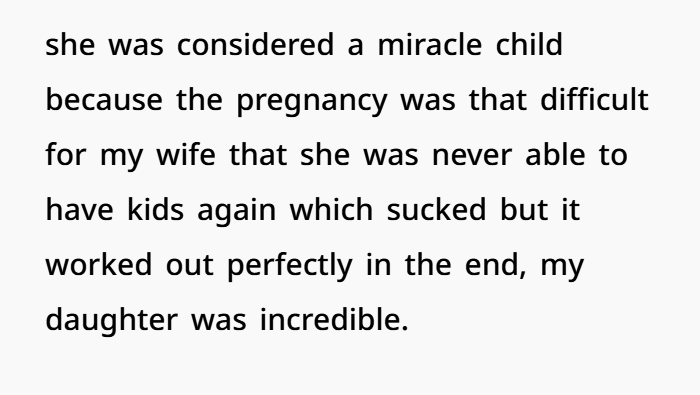
This story follows a 43-year-old father whose life unraveled after discovering that his wife of decades had been cheating on him with a wealthy acquaintance. The couple had been together since they were teenagers, and their daughter—now 25—was their only child after a difficult pregnancy that left his wife unable to have more children. For years, he believed they were building a stable future together, even sacrificing intimacy and free time in pursuit of financial goals like early retirement.
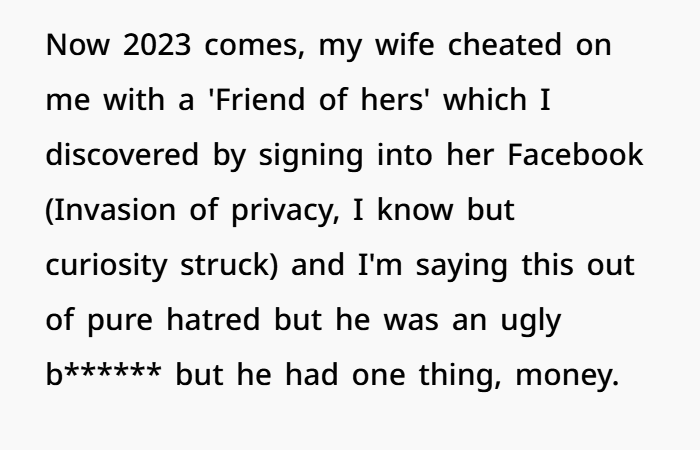
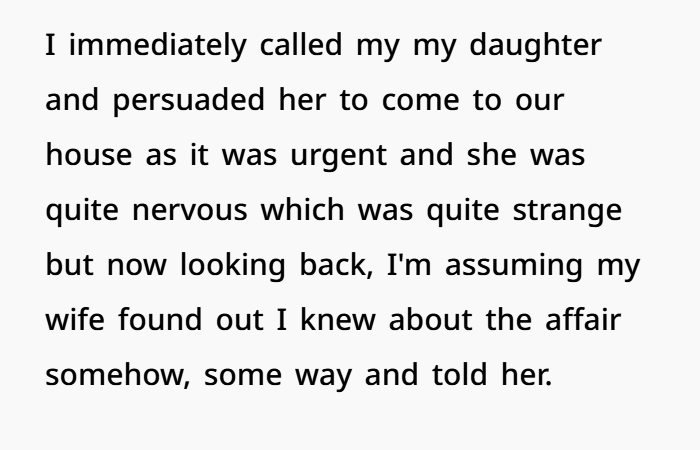
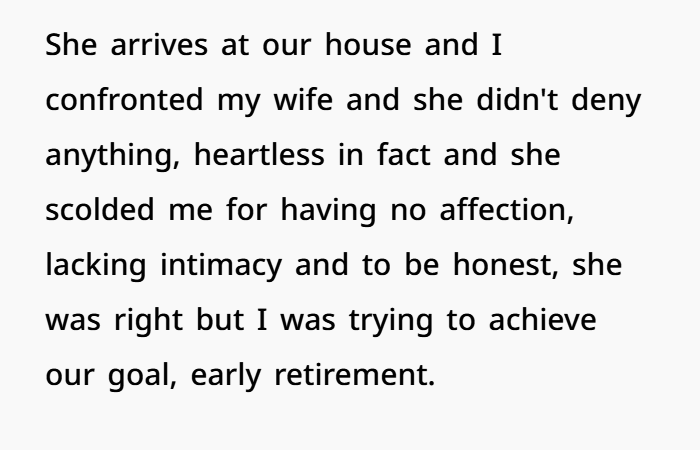
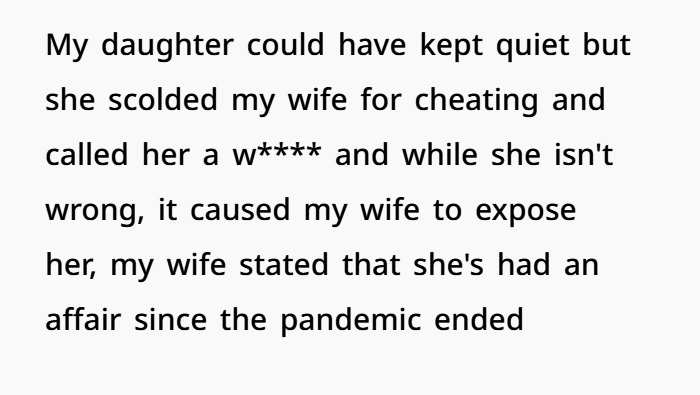
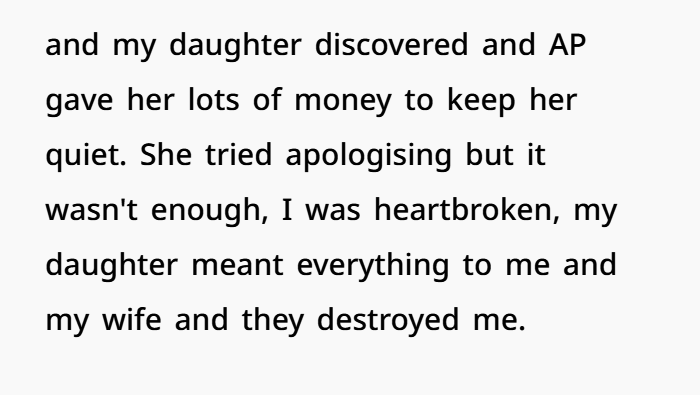
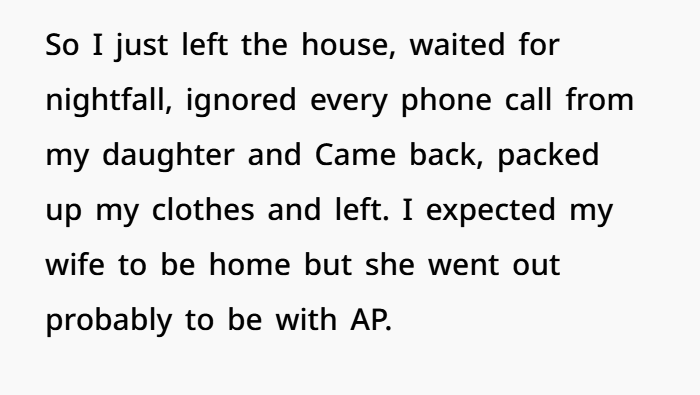
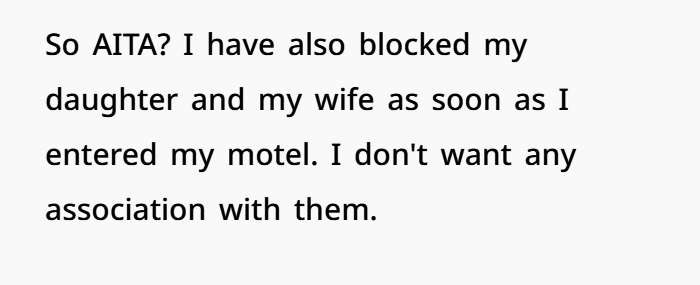
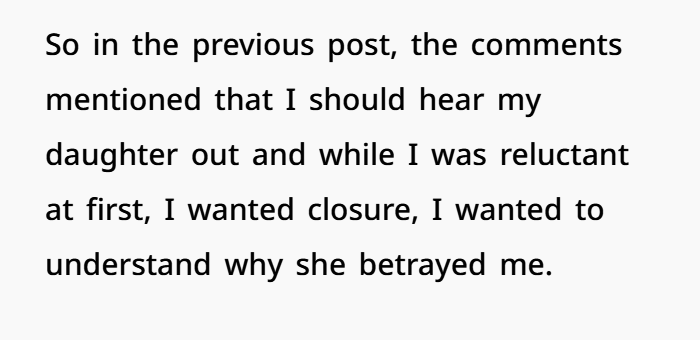
Everything collapsed in 2023 when he logged into his wife’s social media account and discovered messages confirming the affair. When he confronted her, she didn’t deny it. Instead, she blamed him for emotional distance and lack of affection. But the bigger shock came when the argument escalated: his daughter, who initially criticized her mother for cheating, was suddenly exposed as someone who had known about the affair for years. According to the wife, the affair partner had paid the daughter to keep quiet. Feeling betrayed by the two people he trusted most, the father packed his belongings that same night, left the family home, and cut contact with both of them.



Stories like this hit harder than typical relationship conflicts because they involve two layers of betrayal at once: marital infidelity and family loyalty breakdown. Discovering that a spouse cheated is already one of the most painful experiences someone can face. But learning that a child knew about it—and actively helped hide it—can intensify the emotional damage in ways that psychologists say are uniquely devastating.
To understand why this situation feels so overwhelming, it helps to examine the psychological dynamics behind infidelity trauma, family trust violations, and financial manipulation.
First, consider the marital betrayal.
Infidelity is one of the most common triggers for divorce worldwide. Relationship research consistently shows that extramarital affairs are among the top causes of marital breakdown, often leading to severe emotional distress for the betrayed partner. Many therapists compare the experience to a form of emotional shock because it destabilizes the victim’s entire understanding of their relationship history.
People often describe the moment they discover cheating as a kind of identity collapse. The life they thought they were living suddenly feels like it was built on lies. Memories, trust, and future plans all become questionable at once.
In this case, the husband also faced accusations from his wife during the confrontation. She claimed he lacked affection and intimacy because he focused on financial goals like early retirement. That dynamic is actually quite common in long-term marriages. Couples sometimes become so focused on building financial stability—saving, investing, paying off debts—that emotional connection slowly erodes.
This phenomenon is sometimes called “goal-driven relationship neglect.” When partners prioritize long-term financial security or career advancement, they may unintentionally create emotional distance. However, experts emphasize that dissatisfaction with intimacy does not justify cheating. Instead, couples are encouraged to address those issues through communication or counseling long before an affair begins.
The second and more complicated layer of the story involves the daughter.
Family relationships operate on an entirely different emotional framework than marriages. A parent’s relationship with their child is often built on unconditional love and trust. When that trust breaks, the emotional fallout can be particularly intense.
Psychologists refer to this type of experience as family betrayal trauma. It occurs when someone relies on a family member for emotional safety but discovers that the person participated in or concealed harmful behavior.
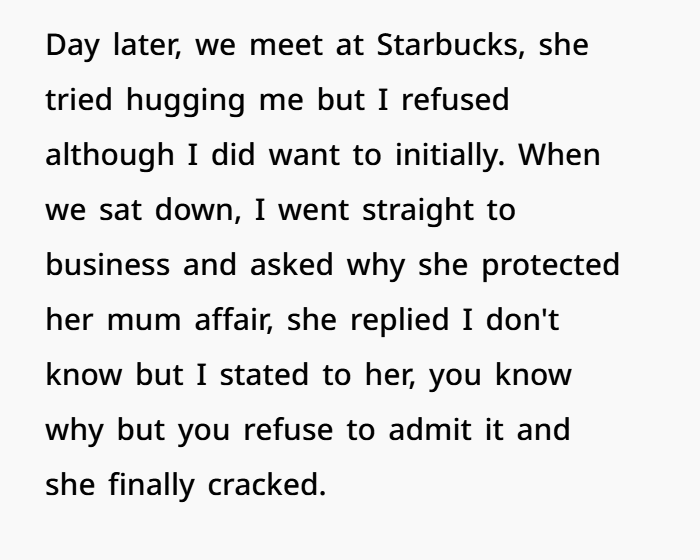
In this story, the father expected his daughter to be someone who protected the family. Instead, he learned she had accepted money from the affair partner to keep quiet.
The financial element introduces another dimension: financial manipulation and moral conflict.
When the daughter discovered the affair, she was apparently struggling financially during university. Students facing financial pressure sometimes experience what behavioral economists call “survival decision bias.” In difficult financial situations, individuals may prioritize short-term relief over long-term ethical consequences.
The affair partner offering money created a powerful incentive. For someone already stressed about tuition, living costs, or debt, that offer could feel like an easy solution in the moment—even if it creates deeper problems later.
But the father’s reaction also makes sense emotionally.
Parents often assume that if their child ever faces financial hardship, they will ask for help. The father’s question during their meeting—“Why didn’t you come to me?”—reflects a deep emotional wound. To him, her accepting money from a stranger rather than trusting him feels like a rejection of their relationship.
This misunderstanding is actually common in families.
Young adults sometimes hesitate to ask parents for financial help because they don’t want to appear irresponsible or dependent. They may also believe their parents already have enough stress or responsibilities. Unfortunately, those assumptions can lead to decisions that damage trust in the long run.
Another important aspect of the story is the father’s decision to leave immediately and cut contact.
When people experience major betrayal, their brain often enters a protective state. Psychologists call this emotional withdrawal response. It’s a defense mechanism designed to reduce further pain. By distancing themselves from the people who caused the trauma, individuals attempt to regain emotional stability.
This explains why the father packed his belongings and blocked both his wife and daughter. At that moment, continuing to interact with them likely felt unbearable.
However, long-term family estrangement can have complicated emotional consequences. Research on family cutoff dynamics suggests that while distance can provide short-term relief, unresolved emotions may resurface later in life. Many people eventually seek closure, reconciliation, or at least understanding.
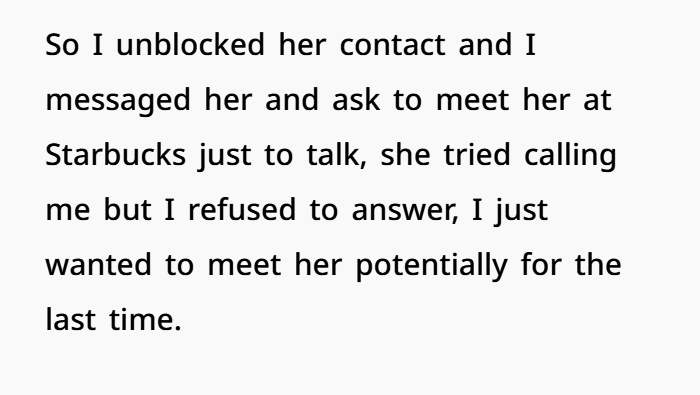
That’s exactly what happened here when the father decided to meet his daughter for coffee.
The meeting itself is an important turning point. It shows that even after intense betrayal, curiosity and the desire for answers can reopen communication. He wanted to understand her reasoning, even if he wasn’t ready to forgive her.
Her admission that she doesn’t fully understand why she made the decision is also psychologically believable. Humans often struggle to explain choices made under pressure years later. What seemed logical or necessary at the time may look irrational in hindsight.
When she asked if their relationship could ever recover, his response—“not for a long time”—reflects another key truth about trust.
Trust rebuilding is slow.
Relationship therapists often say rebuilding trust after betrayal can take years. The process usually involves consistent honesty, accountability, and patience from the person who broke that trust.
But forgiveness doesn’t always mean reconciliation.
Sometimes people forgive internally to move on emotionally while still maintaining distance from the individuals who hurt them. Every situation is different, and there’s no universal timeline for healing.
Finally, the symbolic moment at the end of the update—when he gave his daughter the old photo frame—captures something many families experience during conflict.
It represents mourning the past version of a relationship.
The father isn’t just grieving the affair or the secret. He’s grieving the version of his family he believed existed. The picture from her childhood represents a time before the betrayal, before trust was broken.
Whether their relationship eventually recovers or remains distant will likely depend on many factors: time, accountability, emotional healing, and whether both parties truly want to rebuild what was lost.
Because in situations like this, the hardest question isn’t who was right or wrong.
It’s whether broken trust between family members can ever truly be repaired.
Here Are The Comments