
Stepmom Clashes with Stepchildren After Custody Change: Father Struggles to Maintain Peace at Home
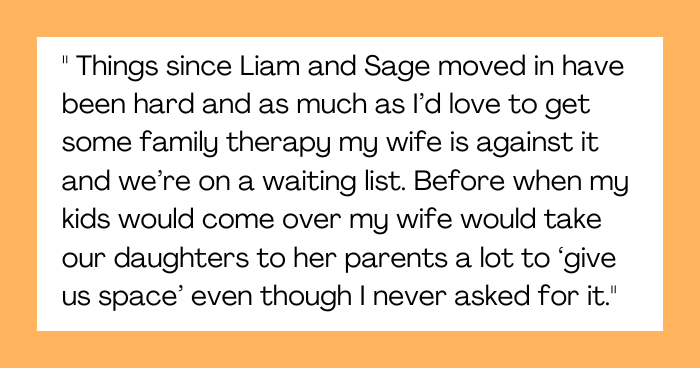
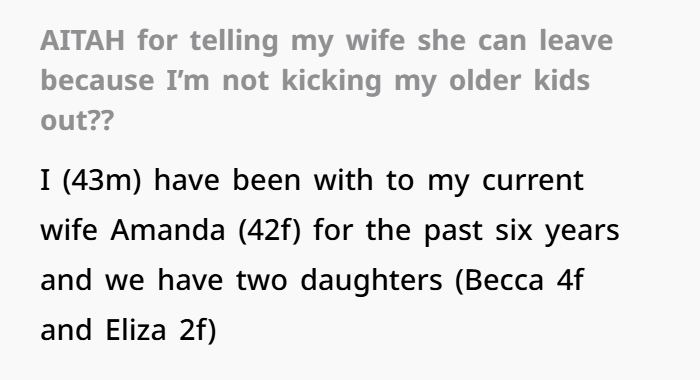
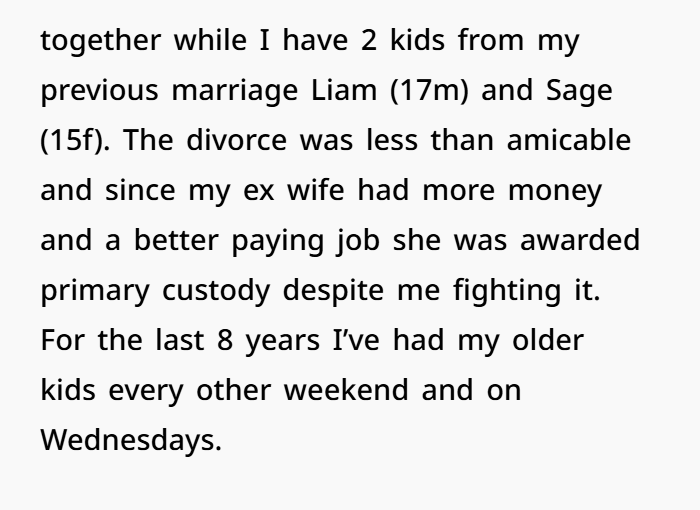
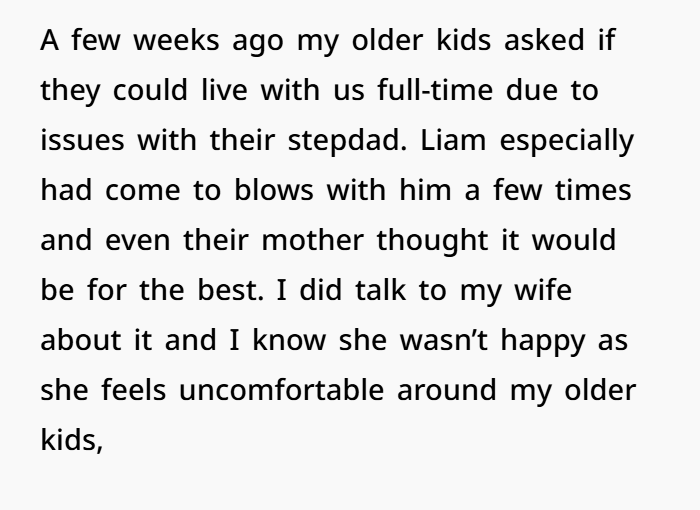
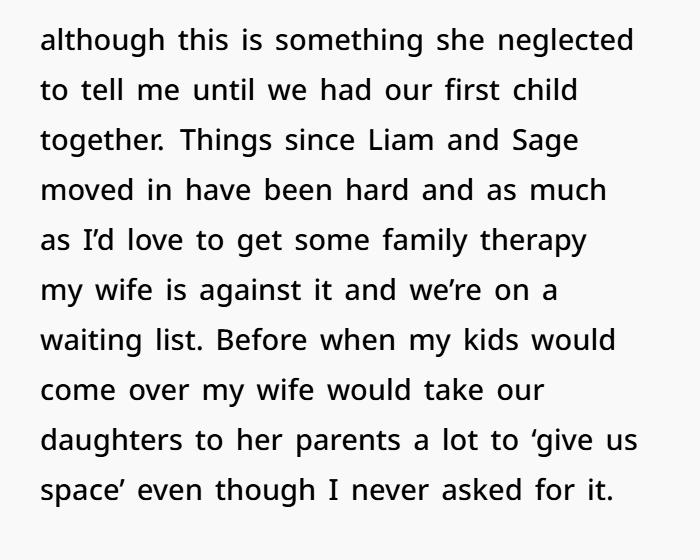
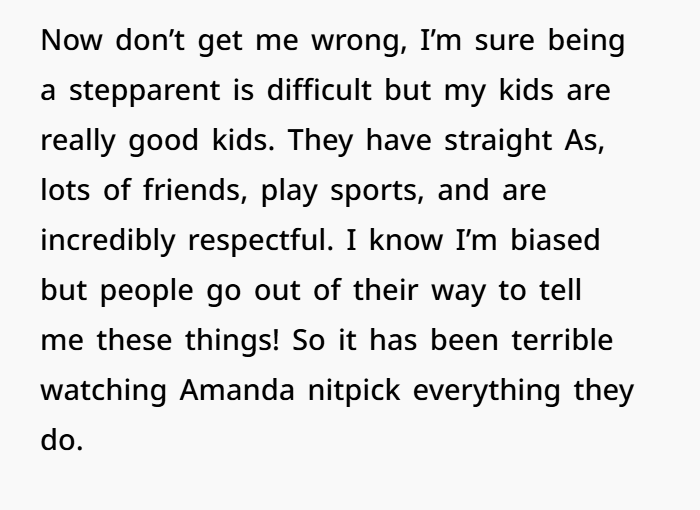
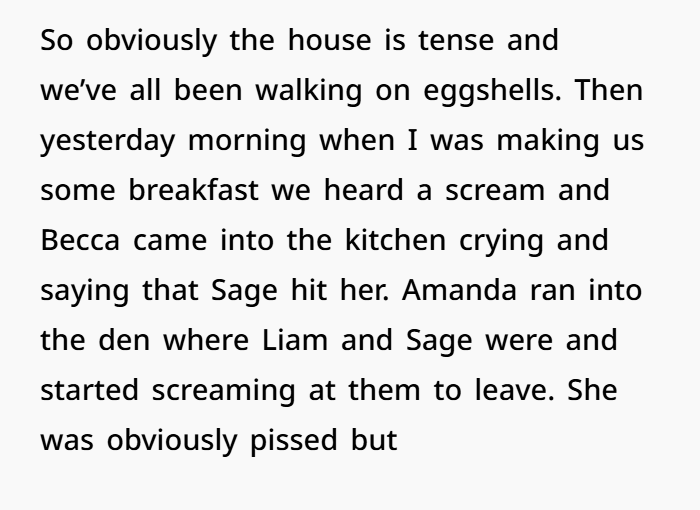
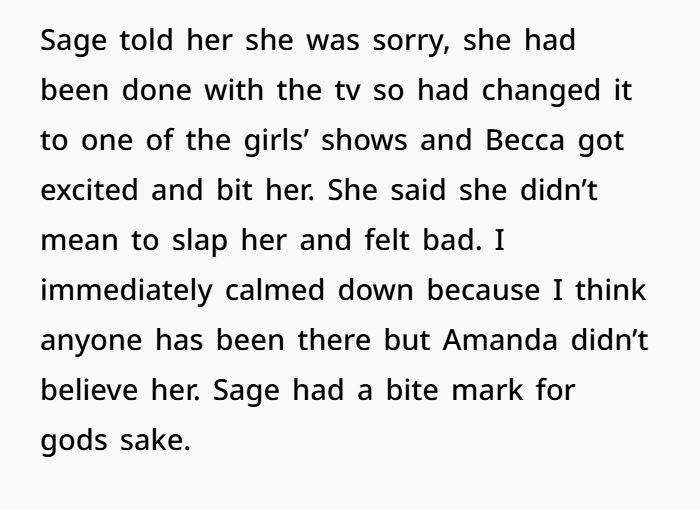
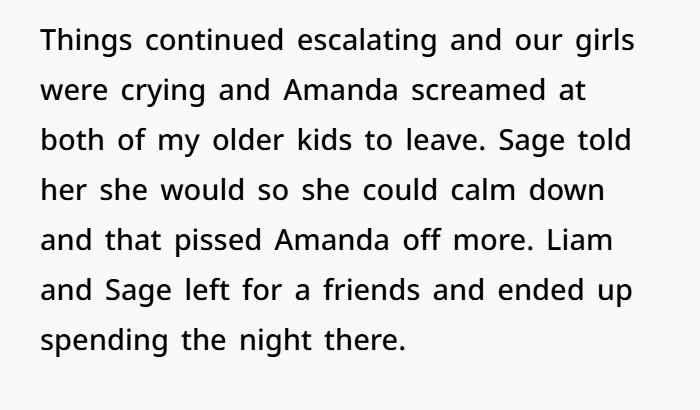
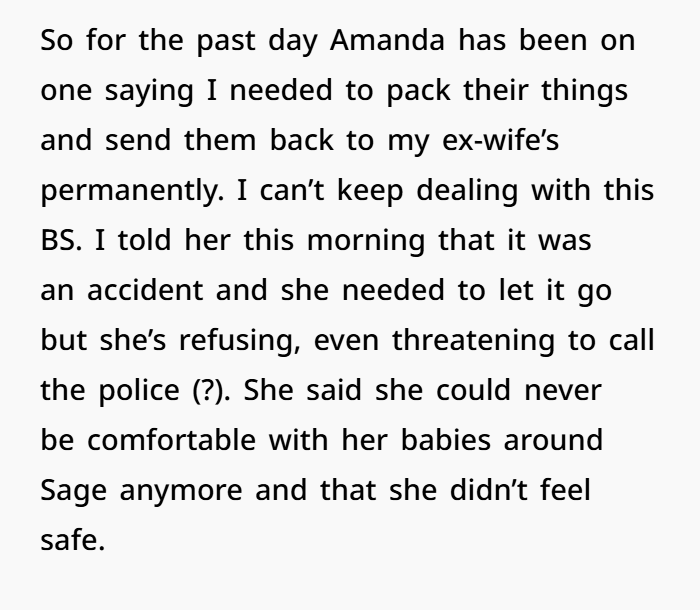
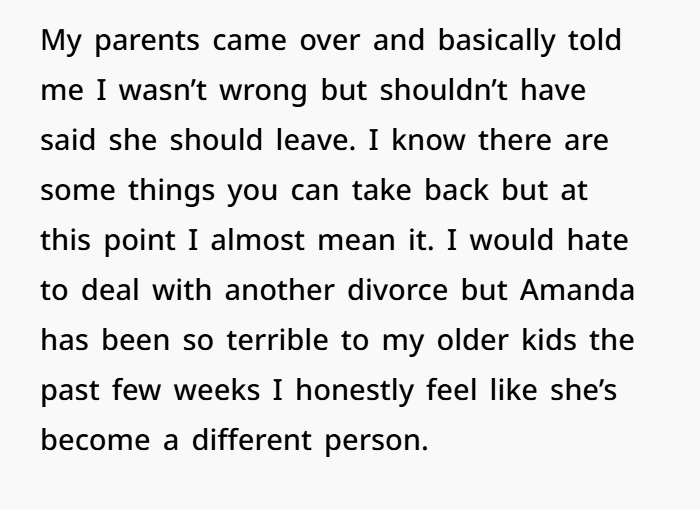
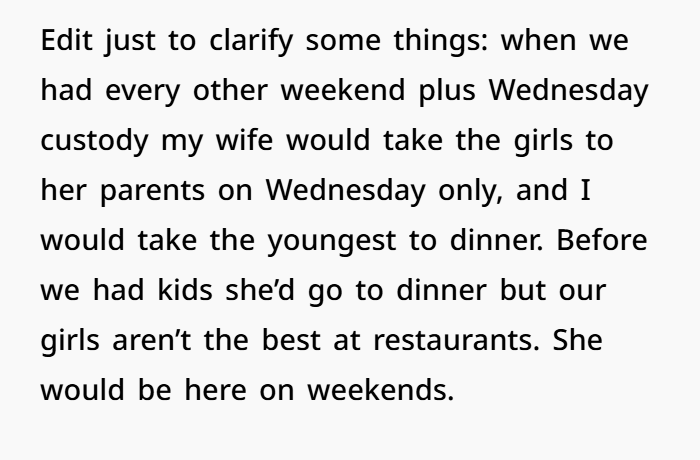
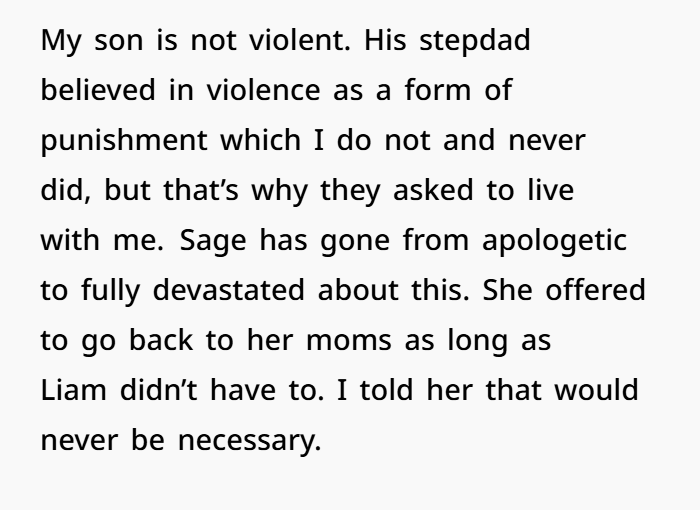
In this post, a father dealing with a rift in the family that came about when his two teenage kids, Liam, 17, and Sage, 15, moved in full-time because of their problems with their stepfather. Amanda, the father’s wife, had previously maintained a distance on visitation weekends but is now living with her step-children which has also resulted in tensions. As the adjustment period continued, the situation grew tense when an unfortunate accident with the youngest child, Becca (4) and also Sage occurred. Amanda’s response to this prompted the father to rethink their relationship, and divorce is on the table.
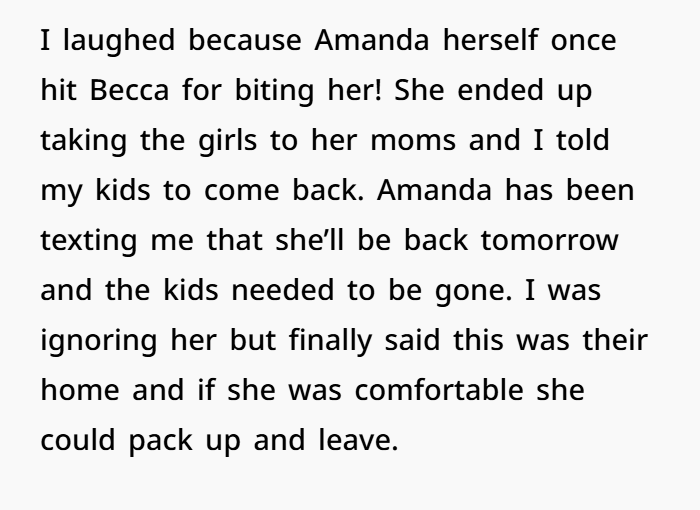
The father would like to have a situation where all of his children can have the best chance of growing up safe and loved, but Amanda refuses to let his stepchildren stay, even saying they need to leave for good as it is a matter of safety. The matter has fueled wider discussions, however, about blending families, the trials of stepparenting, and how to protect younger siblings while still staying close to the older ones.
Some folks just don’t like their partner’s kids

But one dad decided to ask his wife to leave when she started making demands about his children


Challenges of Blended Families and Legal Considerations
Blended families have their own special set of challenges, the most often one revolving around living arrangements and adapting to change. Here, the father had brought Liam and Sage into the scene—his home—and broke the static state of affairs, creating some friction in the process. According to research, 40% of married couples with children are in blended families, and it can take many years for the integration to stabilize. But Amanda’s responses—which include refusing therapy and trying to cut Liam and Sage out of their lives—are not helpful and perhaps even damaging to the family.
Child Adjustment in Blended Families
For teenagers like Liam and Sage, taking a step into blended family life can often come as a rude awakening, given that they frequently have to adjust to the new environment while feeling possibly displaced or unwanted. Study finds that communication and constancy are essential to easing a child’s transition. Such principles do not align with Amanda’s deep-seated hostility toward the stepchildren, resulting in their alienation. In addition to their impressive behavior (e.g., good grades, polite), the fact that the biggest pushback regarding becoming one big family seems to be Amanda, further demonstrates that Liam and Sage are not the issue.
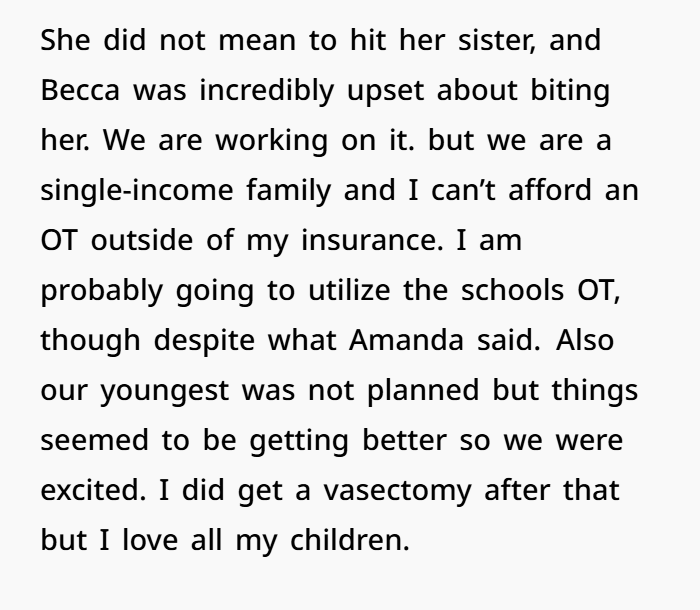
The incident with Becca at the cabin, although accidental, also shows how tricky sibling relationships can be in blended families. Amanda perceives the slap as hazardous, however, the child behavior professional labels it as typical in homes with more than one child. But as with Sage’s heartfelt apology, intent, context, and regret are the all-important factors in understanding these things.
Legal Rights of Parents and Children
Because both children are teenagers, the father in this situation would likely have a strong legal position; courts generally give significant weight to the expressed preference of kids when reviewing custody arrangements. Unless serious safety concerns are present, age-appropriate preferences of children and teenagers usually are given a great deal of weight in custody arrangements in most jurisdictions. Unless a police report exists, Amanda’s threats to either call the cops or have the family kicked out hold no legal merit — far from it.
And Liam and Sage are entitled to a safe, supportive home. If Amanda or the father alienates them, it can open the door for alienation claims against Amanda and/or the father — and that is a very real and growing concern within family courts. And if Amanda refuses to integrate further or advances her demands, the risk of Liam and Sage’s mother suing him for custody increases — a situation the father is clearly keen to avoid.
The Role of Therapy and Mediation
Which is why family therapy is a great tool to work through these issues together and help blended families learn to cope with their feelings and build healthy connections. The fact that Amanda continues to decline counseling is an enormous obstacle. The American Psychological Association (APA) states the therapy, when the dynamics include a stepfamily, can reduce familial conflicts, in fact, by as much as 60% (APA, 2015).
While family therapy was on the horizon for the entire family, the father could seek individual counseling for himself and his older kids. Similarly, online counseling services including BetterHelp and Talkspace can provide greater access early on, especially if in-person therapy has a long wait time.
Protecting the Well-being of All Children

We were proud of justifying the fathers actions in standing up for Liam and Sage — which is an even more incredible achievement especially when it comes to older children being treated unfairly. But we also need to work on why Becca is biting – the biting is not okay, but also what we do not want is Becca to be scared of visiting people, and we need her to feel safe. While Amanda was hesitant, school-based occupational therapy services could help provide some strategies while waiting for this option outside of school.
Some readers still wanted more details
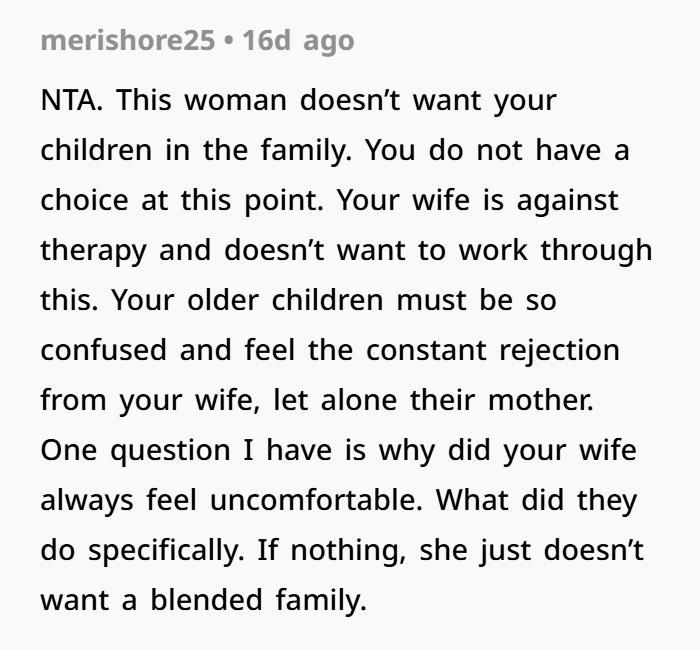
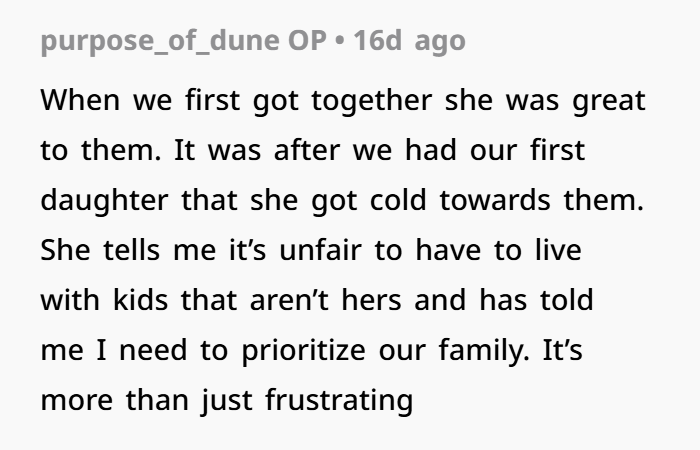
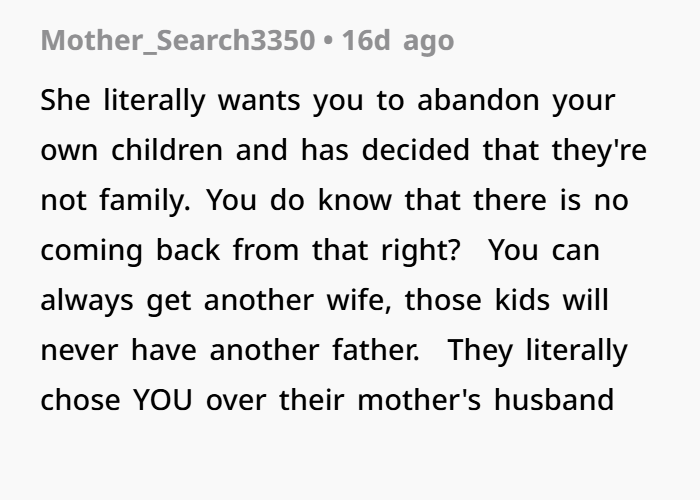

The dad is in a tricky spot trying to honor his older kids while also stressing his marriage. The central conflict is driven by Amanda’s refusal to embrace the reality of life with a blended family, as well as her animosity toward Liam and Sage. Give it time, it’ll escalate to the point of utter family break down which will be when you least expect it. The question will lie in whether or not they can invest in therapy, get firm about boundaries, and open a line of communication, or if these problems will be insurmountable and divorce an atrophic process.