

MIL Banned from Seeing Grandkids After Insulting Dad in Front of His Children
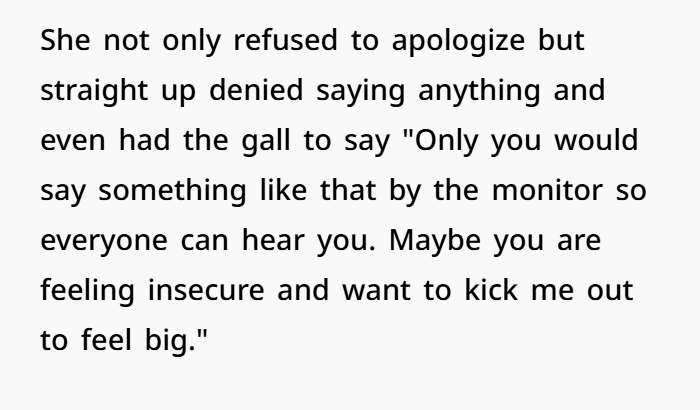
Dealing with in-laws has never been easy and when culture and trauma are involved then there are added layers of complexity. But for this father of two, it finally broke him when he overheard her saying he was “too stupid to care” for his daughter on a baby monitor.
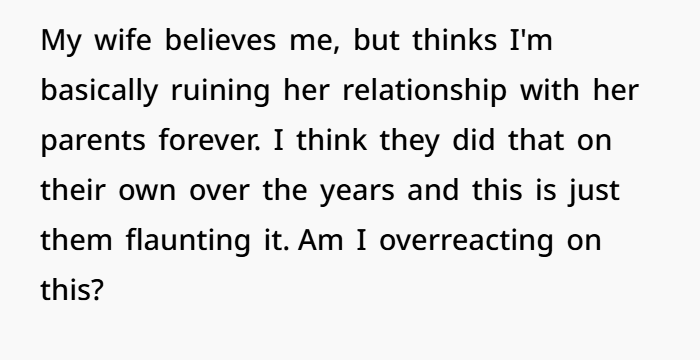
This was not an isolated event. His MIL had been taking potshots for the last couple of months—in his parenting decisions, in their home routines, all the while dialling up the tension in the family. Angry and wanting to avoid conflict with his daughter, he took in his in-laws, packed up their things, put them outside and told them they would only be allowed back if they apologized and follow the rules of the house. Although his wife sympathizes with his situation, she fears what he might do could permanently destroy her relationship with her parents.
And now he wonders if he overreacted or if his reaction was appropriate.
Mothers-in-law can be a handful, as this guy unfortunately found out the hard way

His in-laws moved in to help take care of his newborn son, but his mother-in-law constantly criticized everything his wife did



Setting Boundaries, Cultural Expectations, and Family Dynamics
1. The Complexity of Cultural Expectations in Family Roles
In several cultures, including Chinese culture, multigenerational living is the norm, and there is an expectation that elders are involved in child-rearing. The dichotomy in cultural norms can lead to friction as contemporary, Westernized value systems—such as a focus on nuclear family independence—come up against more traditional expectations.
Although the wife’s parents probably view their parenthood as supportive and old-fashioned, their presumptuousness and intrusive manner disrupt the purpose behind it. From the MIL making off handed remarks about sending her daughter duck and his parenting — to going as far to speak down on the father right in front of his daughter — there were lines of respect that were clearly crossed.
2. Emotional and Psychological Impact of Toxic Behavior
That comment the MIL made via the baby monitor is hurtful for several reasons, although the lack of respect is important, but mainly because of the emotional toll on the child. Even if children are quite young they will read negative tones and they will read negative feelings. So, you can imagine they will get confused or they may feel insecure about their family.
Permitting this type of toxic behavior to go unchallenged can unpredictably affect how the daughter views her father, and the foundation of her safety. Child Development Experts say that young children purely depend on the parents for their development milestones, and breaking the steadiness between the parents by undermining the authority or the role of one parent can affect the emotional well-being of that child.
3. Setting Boundaries vs. Escalation
It does seem a bit excessive to put out his in-laws belongings on the porch but, all things considered, not entirely unjustifiable. When tensions are running high, boundaries become even more critical for maintaining a healthy household. But the snap nature of the action—without prior calm talks—could exacerbate the fracas for no reason.
If he truly wanted to engage with family dysfunction then he might have done it in a more deliberate setting, where he sits down with his wife and in-laws, explains their predatory behavior and tells them to stop or there will be consequences. On the other hand, this MIL denying and gaslighting — “Maybe you are just being insecure” — made me to realize that a calm dialogue might not have been very fruitful either.
4. Balancing Marital Harmony and Family Dynamics
Exactly where that leaves the wife, is a tough spot to be in. Even though she supports the version of events told by her husband, her heritage and tumultuous relationship with her parents have entangled her in a tug-of-war between her family and her parents. His refusal to back down, although with the purest of intentions, may actually push her away and make matters worse.
We suggest couples counselling or a mediated family conversation to create a space where both sides can have their say and there can be an attempt at a solution that respects the boundaries of the nuclear family, while finding a way to avoid a permanent rupture.
5. Key Steps Moving Forward
- Communicate with Your Wife:
Reaffirm that your actions were motivated by protecting your family, not causing harm. Emphasize the importance of mutual respect within the household. - Establish Clear Boundaries:
If the in-laws return, set firm ground rules for their behavior. This could include limiting their input on parenting decisions and ensuring respectful communication. - Consider Professional Mediation:
A family therapist familiar with cross-cultural dynamics could help navigate the tension and find a middle ground that honors both cultural values and individual boundaries. - Model Healthy Conflict Resolution for the Kids:
While protecting the household is crucial, demonstrating calm and constructive ways to handle conflict sets a positive example for your children.
In the comments, readers applauded the man for laying down the law and lambasted the mother-in-law for her appalling behavior


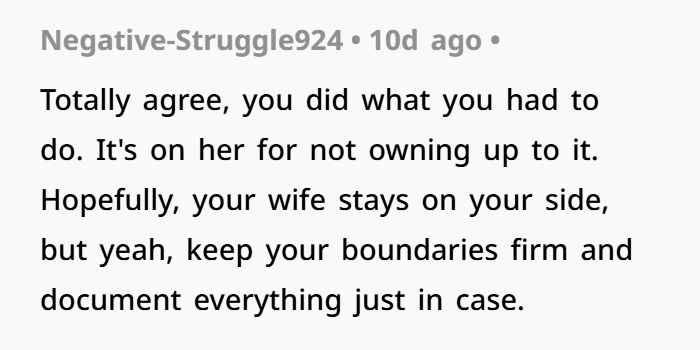
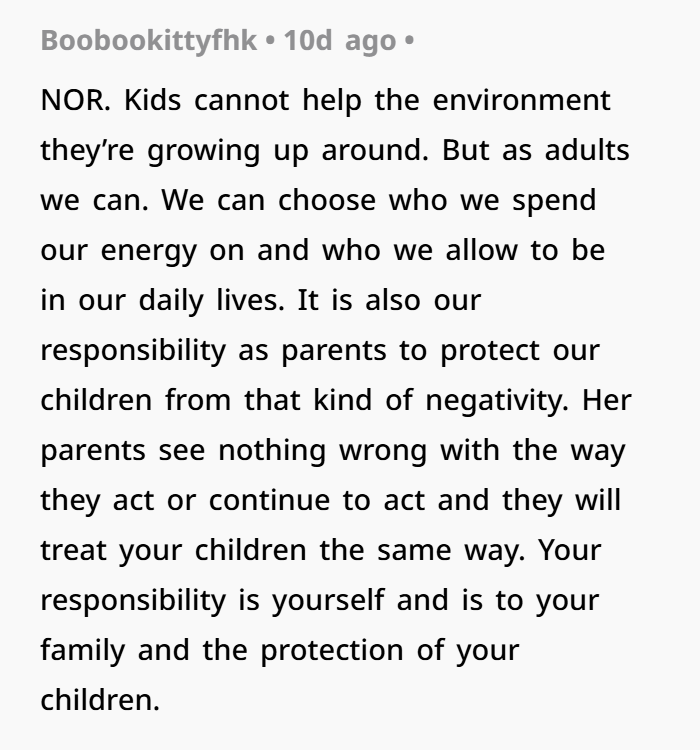
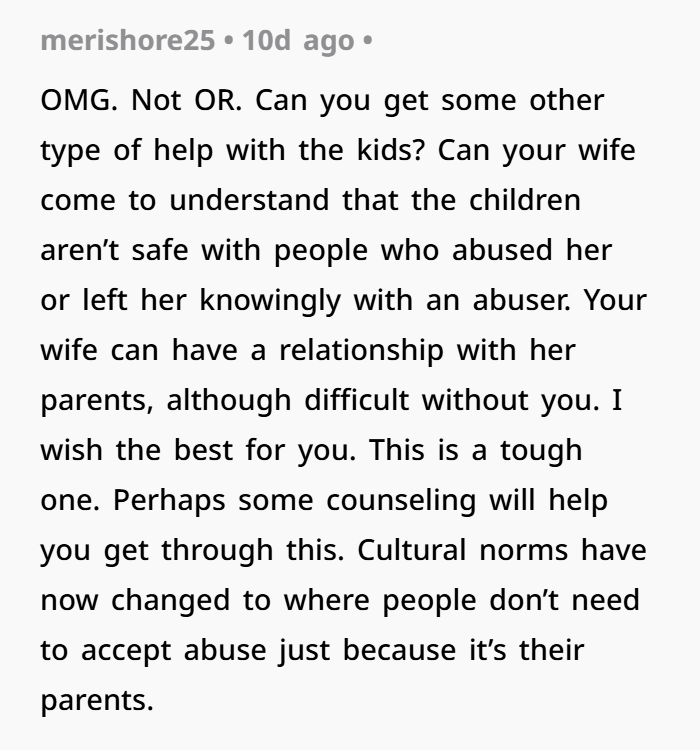
To pack up his in-laws’ belongings and kick them out — this response is deeply frustrated and defensive. Although going to that length is extreme, PACK YOUR BAGS, MIL is always belittling you and to hear an insult through the baby monitor?
In our three-party relationship, certain boundaries can be clear, allowing open dialogue with his wife, or even a professional mediator, both of which can be important to protect his immediate family during the fallout. Of course, for the home to live in harmony, respect should be mutual.