
Man REFUSES to hold GF’s hand at funeral; ‘Her sadness is taking a backseat.’ AITA?
OP (23 M) and his girlfriend, Leia, went to the funeral of Khalid, Omar’s half-brother. Leia didn’t know Omar as long as OP and Omar were friends but she still considered Omar a friend. Buried in a culture where men and women are not supposed to touch. Both OP and Leia knew these customs going into it.
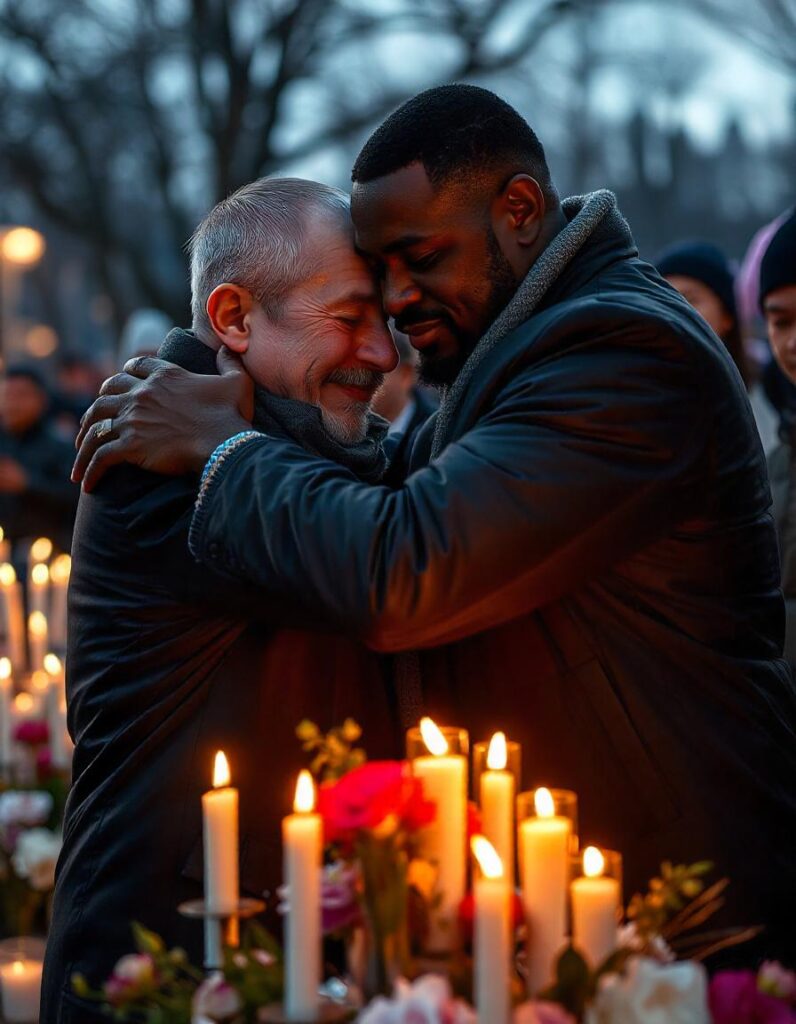
At the funeral Leia began to cry and wanted OP to hold her hand. But given the role of the culture and the place OP was in trying to help Omar (who was in mourning), he said no. OP ended up hugging him for most of the funeral instead since hugging is allowed per Omar. This visibly upset Leia and she started pouting. OP reads this, and for the rest of the funeral ignores her feelings and continues to prioritize Omar.
Leia was the first to leave (by her own doing) and OP made an excuse for Leah leaving to Omar. Soon after, though, Leia felt that OP should have put her emotional needs first and she confronted him. To that end, OP does staunchly uphold that in that moment, Omar as the grieving party was his number one priority. And OP, meanwhile, is wondering if he was wrong for not supporting Leia when she was upset.
Read for more info Reddit


Balancing Cultural Respect, Relationship Expectations, and Funeral Etiquette
Funerals are emotionally charged events where people grieve differently. While it’s natural for Leia to seek comfort from OP, there are several key factors at play here:
1. Cultural Sensitivity and Boundaries
OP and Leia were aware of the cultural norms before attending the funeral. In many cultures, particularly in conservative Middle Eastern, South Asian, or Islamic traditions, public displays of affection between men and women—especially in solemn settings like funerals—are considered disrespectful. Had OP held Leia’s hand, it could have drawn unwanted attention or even caused discomfort for Omar and his family. OP was adhering to the cultural expectations set for the event, which was respectful.
2. Primary vs. Secondary Grief
The central focus of a funeral should always be on the immediate mourners—those who have suffered a direct loss. Omar, having lost his half-brother, was understandably devastated. Leia, on the other hand, did not personally know Khalid and was upset more due to the emotional atmosphere rather than a personal connection to the deceased. OP’s decision to prioritize Omar’s grief over Leia’s distress makes sense, as Omar was the person experiencing profound loss.
3. Relationship Dynamics and Emotional Support
While OP’s commitment to supporting his grieving friend is commendable, Leia’s feelings shouldn’t be entirely dismissed. She may have felt emotionally abandoned in a moment of distress, especially seeing OP physically comforting Omar while ignoring her. However, her expectation that she should “always be the priority” is unrealistic, particularly in a situation where someone else is in far greater need of support.
4. The Lie About Leia Leaving
One misstep OP made was lying about Leia’s early departure. While his intent was likely to avoid drama, it could have created an unnecessary rift or made Omar feel guilty. Transparency would have been the better approach—perhaps saying Leia needed to step away because she was feeling overwhelmed, without adding unnecessary details.
Let’s see what readers thought:
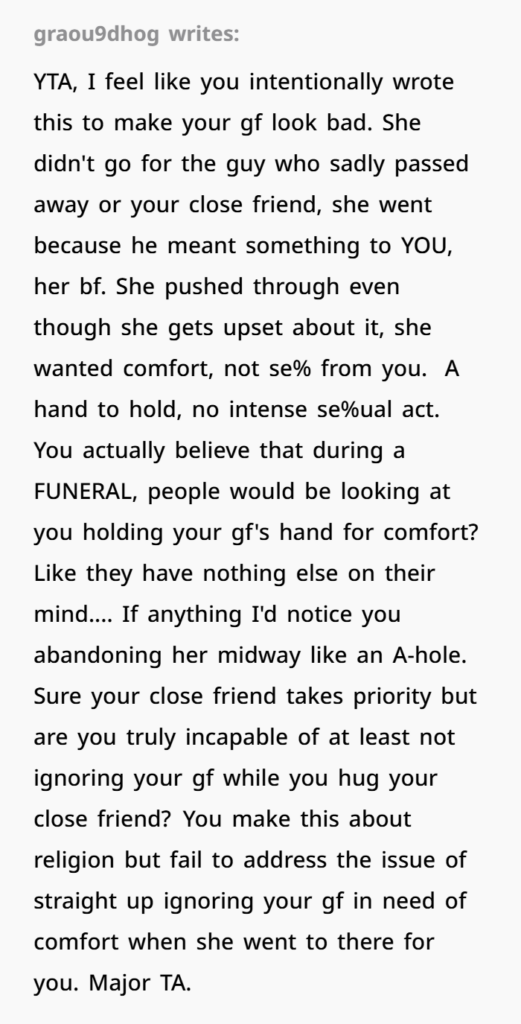
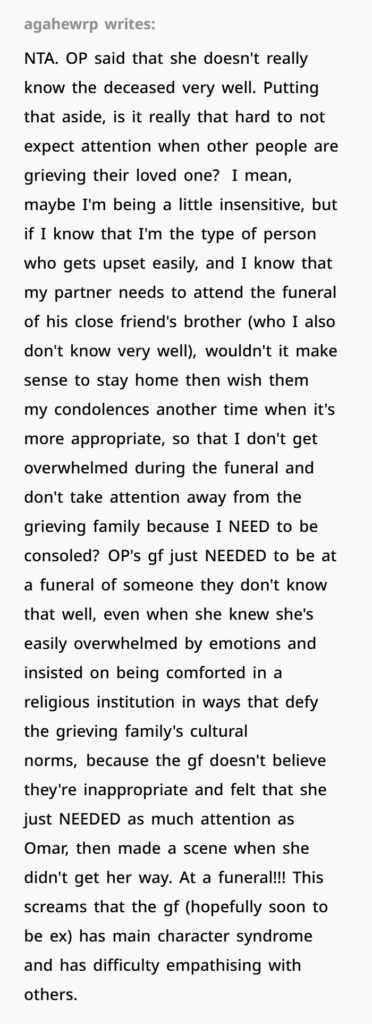
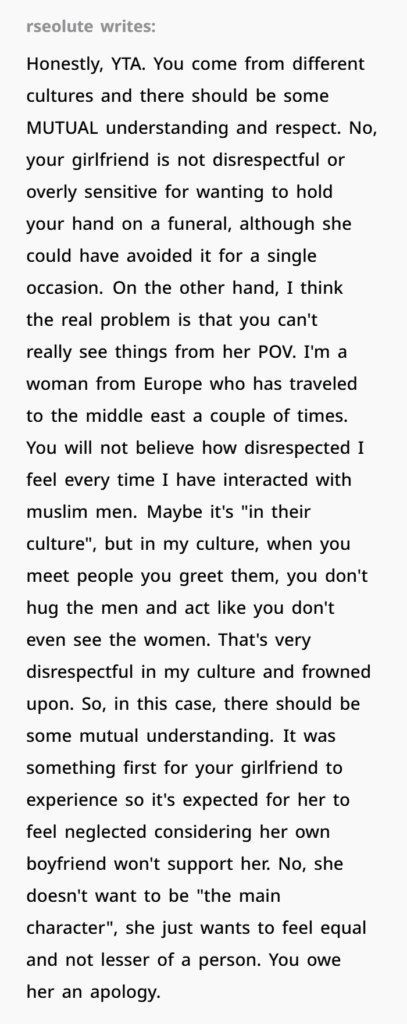

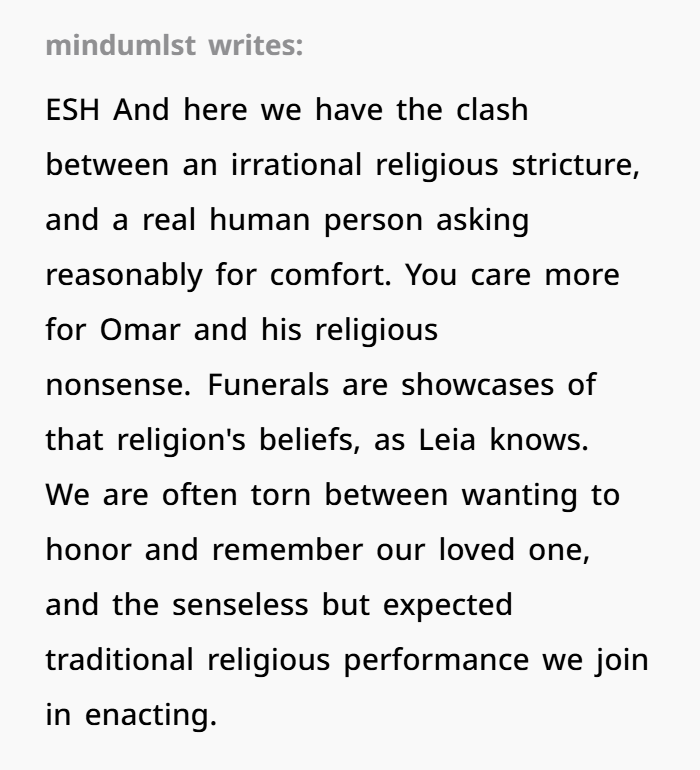
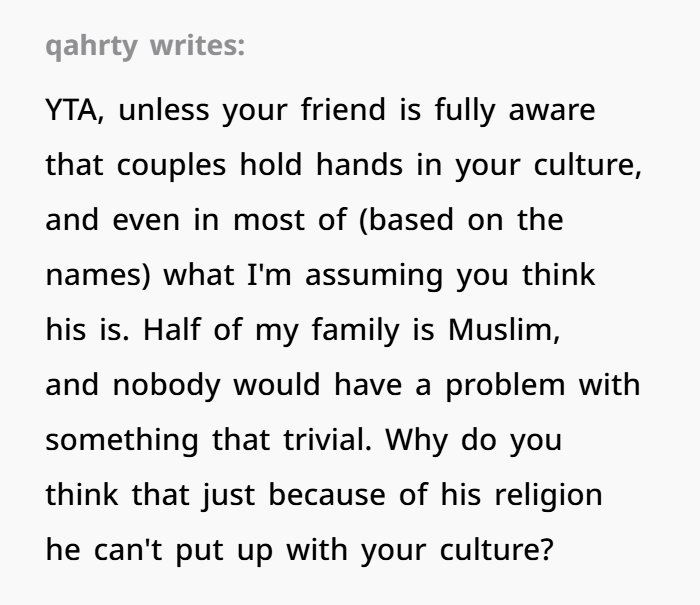
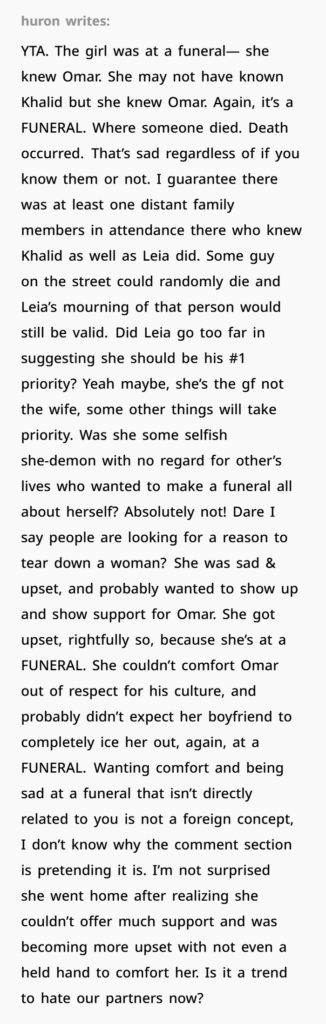
OP is not to blame for putting Omar’s grief before Leia’s month-long annoyance when a funeral, and cultural customs there in respect of it, were involved. But just pretending Leia didn’t exist and lying about her leaving wasn’t the best. What would have been easier to digest is if we stuck with Leia mourning over Omar, and later inserting a reason as to why he had to deal with Omar first.
But that’s a little selfish of Leia to expect OP’s attention when another was going through profound grief. Okay, so absolutely she felt upset, but this funeral was not for her.