

Woman Faces Backlash for Charging Rent to Jobless Brother, Accused of Being Heartless
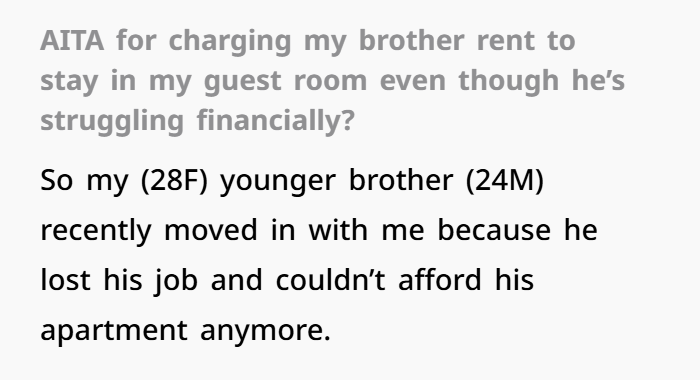
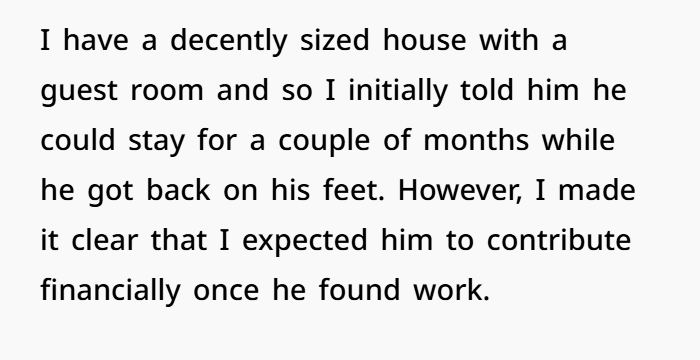
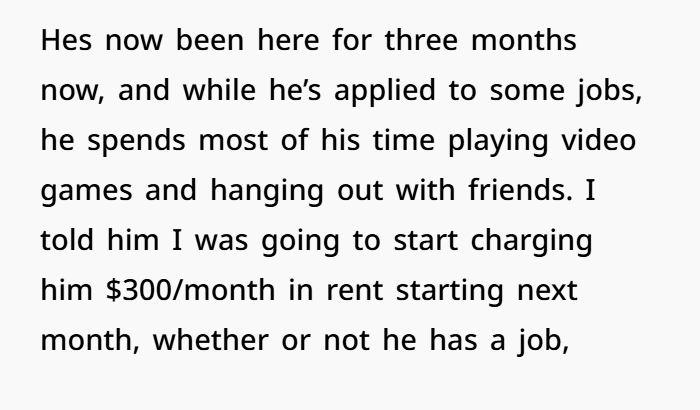
From our archives: This tale illustrates a heated family debate about being accountable with money and setting limits. When a 24-year-old man lost his job, he couldn’t pay rent, so his 28-year-old sister took him in. At first, the pair were allowed to live in her flat rent free for two months, with her stipulating he had to start paying once he got a job. But now, three months later, her brother is still out of work, playing video games and hanging out. Angered by his couch-surfing negligence, she warned him that she was going to charge him $300/month rent, regardless of him getting a job.
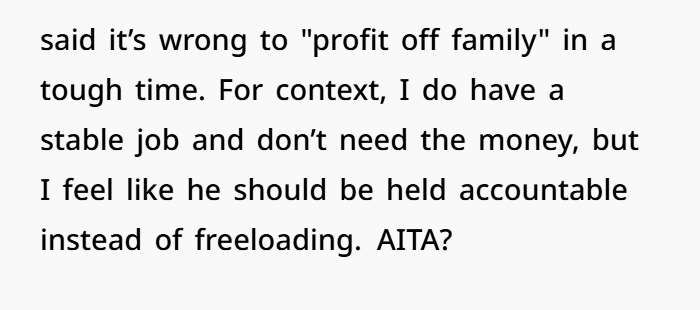
This was met by some strong opposition. Her brother said she was lack of sympathy because she did not need the money herself. His parents also took his side, saying that it was wrong to ‘profit off family’ during a difficult time. Regardless of how others view it, the woman feels that her decision is reasonable and an opportunity to put her brother in his place and not allow him to take her pointing towards entitled guests. The question was whether she was wrong for putting primary boundaries over than family.


Financial Boundaries, Accountability, and Family Dynamics
So much of the messiness of setting boundaries with family, especially when money is on the table, is illustrated in the dilemma. There is a fine line between helping out family members whose lives have been turned topsy-turvy by current events — an act that we feel ought to be a given, but must also be handled with care to keep it civil and fair.
Financial Accountability vs. Enabling
Family dynamics and financial independence experts say that when giving financial assistance to loved ones, you should set boundaries first. If their situation and dilemma lead to dependency instead of responsibility, not asking for share in rent regardless of how long can be damaging. Dr. Terri Orbuch, a known relationship expert, has also suggested that boundaries not being put in place but which are expected to be followed can also cause strain in the future due to resentment arising from this. Charging even a small amount reinforces the principle that all members of the household should contribute and nudges her brother to look for work.
Legal and Cultural Contexts on Charging Rent
From a legal standpoint, commercial and familial landlords need not offer housing free of charge. Even though this case is about family, it resonates with overarching concepts of equity. Tenancy agreements, for example, even the non-formal ones, typically comprise a degree of input toward resources, rent, or maintenance. Additionally, in cultures where family supports each other more, forgoing rent certainly is not a taboo thing to do. Research out of the National Bureau of Economic Research (NBER) found that establishing financial expectations among families may be more beneficial or effective for the supported party in the long-run.
Addressing Family Criticism
Members of a family often have different beliefs on what fairness in these instances means. The brother and parents’ critique capture the belief that family support should be unconditional. But this method may neglect the burden — both emotional and financial — placed on the person doing the handing over. The advocates of financial independence, including the team behind The Financial Diet, emphasize that lending a hand to a family member does not imply one needs to sacrifice his or her own mental or financial wellness. Although the woman doesn’t “need” the money for rent, charging her brother gives an important lesson about personal responsibility, instead of letting him take advantage of her forever.

Balancing Compassion and Firmness
The homeowner is entitled to charge rent — is the best way forward avoiding a stricter response? She could offer to slowly increase the rent or help her brother apply for jobs; anything that shows a willingness to help without sacrificing her own needs and self-care. Suggesting a cultivated timeline of when she can job hunt or help out with other elements (e.g., household chores) could help to soften the blow of her “mean” mentality.
The woman added that she and her brother have a pretty good relationship overall



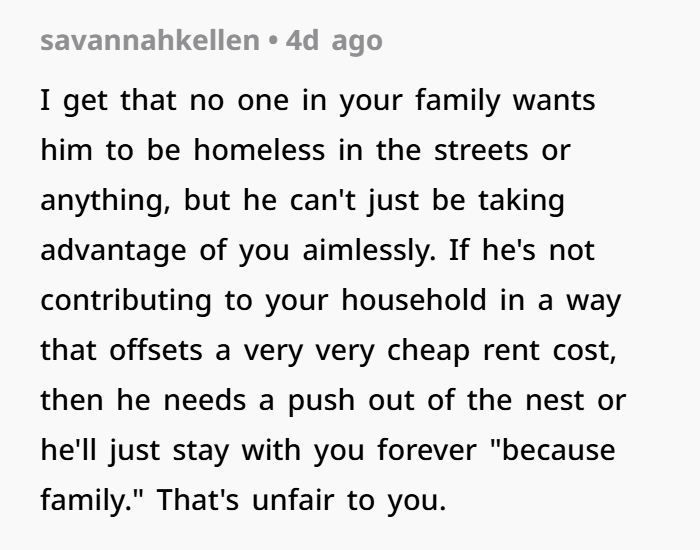


In the end, it is a matter of fairness and about teaching responsibility again that the rent you may charge is a question. The woman sets boundaries that allow their relationship to be centered on accountability instead of complacency. In this case, the small rent paid to her brother is not to contribute to his financials, but instead to enable that familial relationship to include boundaries and contribution from both sides.